
Table of Contents
- 3-Day Cherrapunji Itinerary at a Glance
- Before You Start: How to Plan Your Sohra Trip
- Day 1: The Iconic Waterfalls & Valley Vistas
- Day 2: Subterranean Wonders & Living Architecture
- Day 3: Mystical Valleys & Peaceful Horizons
- Where to Stay in Cherrapunjee After Long Days Out
- Complete Cherrapunji Packing List
- Local Tips for a Smoother Cherrapunji Trip
- Frequently Asked Questions
3-Day Cherrapunji Itinerary at a Glance
If you are staying with us at Jiva Resort Cherrapunjee, one of the questions our guests ask most often is: “Can we really experience Cherrapunji properly in just three days?”
Our answer is yes—but only if you plan your days around geography rather than trying to tick off every attraction on a map.
Sohra, commonly known as Cherrapunji, is not a destination where we recommend rushing from one viewpoint to another. The roads wind through hills, weather can change within minutes, and some of the most rewarding experiences involve steep steps or forest trails. A good itinerary therefore balances sightseeing with realistic travel time and enough breathing room to actually enjoy where you are.
This three-day plan is the route we would recommend to first-time guests who want a well-rounded introduction to Sohra: dramatic waterfalls on Day 1, caves and living-root architecture on Day 2, and quieter landscapes on Day 3.
| Day | Main Experience | Recommended Pace |
|---|---|---|
| Day 1 | Dainthlen Falls, Wei Sawdong Falls, Nohkalikai Falls | Active |
| Day 2 | Mawsmai Cave, Arwah Cave, Living Root Bridge options | Active to strenuous |
| Day 3 | Garden of Caves, Thangkharang Park, Kynrem Falls | Relaxed to moderate |
Our biggest piece of advice: start early. In Sohra, mornings often give you your best chance of clearer valley views before clouds and mist build up, while an early start also gives you more daylight for trails and unexpected weather delays.
Before You Start: How to Plan Your Sohra Trip
Stay in Sohra Rather Than Commuting Every Day
For a three-day itinerary, staying in Cherrapunjee itself makes a noticeable difference. You avoid repeating the long Shillong–Sohra journey every morning and can leave early enough for the more demanding attractions.
At Jiva Resort, our team can also help guests plan their sightseeing days around weather conditions and the amount of walking involved.
Keep Your Schedule Flexible
There is no perfectly fixed “Cherrapunji weather.” A morning that begins bright can become misty or rainy by afternoon. That is part of the character of Sohra, but it also means you should not build an itinerary where every minute depends on perfect visibility.
If a viewpoint disappears into cloud, do not consider the day ruined. Move to a cave, forest attraction or another lower-elevation stop and return to the viewpoint if the weather improves.
Allow More Time Than the Distance Suggests
Distances around Sohra can look deceptively short on a map. Winding hill roads, roadside stops, pedestrians, rain and tourist traffic can all add time. For most local sightseeing drives, we recommend allowing roughly 20–40 minutes between nearby attractions rather than planning your day down to the last five minutes.
For longer excursions such as Tyrna and Nongriat, plan the entire day around the trek rather than treating it as just another sightseeing stop.
Day 1: The Iconic Waterfalls & Valley Vistas
We like beginning a first day in Sohra with water. It immediately introduces you to what makes this part of Meghalaya so distinctive: enormous cliffs, deep valleys and waterfalls that can change dramatically with the weather.
Morning: Dainthlen Falls
Start after breakfast and head towards Dainthlen Falls. From central Sohra, allow approximately 15–25 minutes by car, depending on your exact starting point and road conditions.
Dainthlen is different from the classic vertical plunge-waterfall experience. The surrounding rocky landscape gives you a sense of the scale of the plateau and the valleys beyond it. It is also associated with Khasi folklore, making it a worthwhile stop for travellers who enjoy understanding the stories connected to the landscape rather than simply photographing it.
We recommend visiting relatively early. You will generally have more time and space to appreciate the surroundings before the day’s sightseeing traffic builds up.
Terrain: Mostly a sightseeing stop with walking around viewpoints and uneven outdoor surfaces.
Allow: Around 45 minutes to 1 hour.
Late Morning to Early Afternoon: Wei Sawdong Falls
From Dainthlen, continue towards Wei Sawdong Falls. The drive itself is relatively short, but this is where the nature of your day changes: Wei Sawdong is not simply a “get out of the car and look at the waterfall” attraction.
The three-tiered waterfall is famous for its striking pools and steep forest setting. Reaching the lower sections involves a demanding descent over uneven and steep terrain. After rain, surfaces can become particularly slippery.
Our team always tells guests the same thing before they leave: do not judge Wei Sawdong by photographs alone. The waterfall may look close in pictures, but the return climb is where you feel the effort.
Wear shoes with proper grip and keep your hands free where possible. Avoid carrying a large backpack. Carry water, but do not overload yourself.
Best strategy: arrive before the main tourist rush, especially during busy weekends and holidays.
Terrain: Steep, uneven and potentially slippery trail with significant ascent on the way back.
Allow: Approximately 1.5–2.5 hours, depending on your pace and how far down you go.
For a more detailed look at the route and what to expect, you can read our Wei Sawdong Falls travel guide before setting out.
Afternoon: Lunch and a Short Rest
Do not underestimate the value of a proper lunch break after Wei Sawdong. If you are staying with us, this is one of those days when returning to the resort for a meal and a short rest can make the evening much more enjoyable.
Our restaurant is a convenient place to refuel before heading back out. Give yourself enough time to change into dry clothes if you have been caught in rain and recharge your phone and camera.
Late Afternoon: Nohkalikai Falls
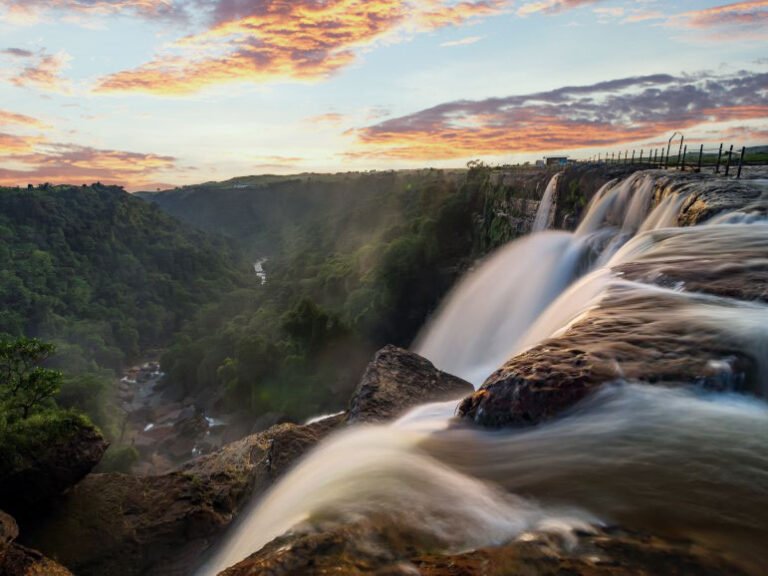
Finish Day 1 at Nohkalikai Falls, one of the defining landscapes of Sohra.
From the main Cherrapunjee area, the drive is generally around 15–20 minutes, although weather and traffic can alter the journey. The viewpoint is accessible without the strenuous trek involved at Wei Sawdong, making this a good way to end an active day.
We particularly like bringing guests here later in the day when the light begins to soften. If the weather cooperates, the changing clouds over the valley can be spectacular.
Do keep one thing in mind: “sunset” in Sohra does not guarantee a visible sunset. Clouds and mist can arrive quickly. Sometimes the entire valley disappears into white cloud—and then opens up again minutes later.
That uncertainty is part of the experience.
For more background before your visit, see our Nohkalikai Falls travel guide.
Return to Jiva Resort
After a waterfall-heavy day, this is when a comfortable room matters. Active couples and travellers who plan to spend most of their days outdoors often prefer our Affordable Tier: the Executive Suite King/Twin, Superior Suite and Premium Suite.
After a hot shower, dinner at our restaurant and a quiet fireside evening, you will appreciate not having to think about another long drive that night.
What to Pack for Day 1
- Good-grip walking or trekking shoes
- Light rain jacket or poncho
- Water bottle
- Small backpack
- Quick-drying clothing
- Power bank
- Waterproof phone/camera protection
- Small towel or handkerchief
- Cash for local stops and entrance charges where applicable
Day 2: Subterranean Wonders & Living Architecture
Day 2 is where we recommend being honest about your fitness. You can make this a moderate day with Mawsmai and Arwah Caves, or turn it into one of the most physically demanding days of your Meghalaya trip by taking on the Nongriat Living Root Bridge trek.
Morning: Mawsmai Cave
Start early with Mawsmai Cave, one of the most accessible cave experiences around Sohra.
The cave is only a short drive from the main Cherrapunjee area, but it is worth arriving early because popular attractions become noticeably busier later in the morning.
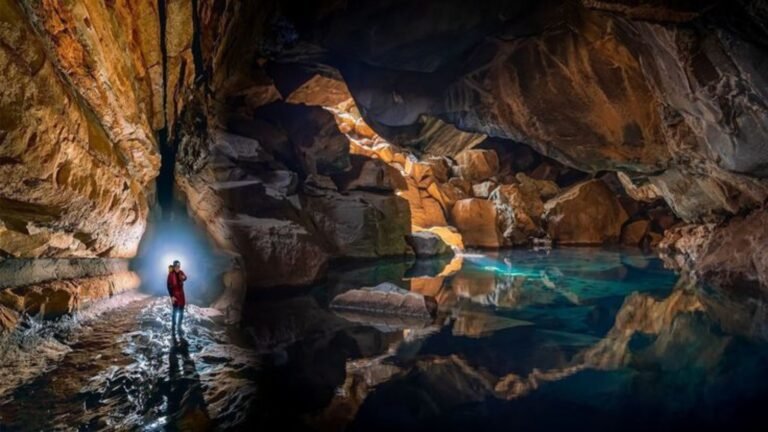
Mawsmai is a natural limestone cave with narrow passages, chambers and water-shaped rock formations. You do not need technical caving equipment for the standard visitor experience, but you should expect uneven ground and sections where the passage becomes narrow.
Our recommendation is simple: wear shoes with grip, keep your belongings compact and do not rush through the cave simply because other visitors are behind you.
Terrain: Uneven, rocky and potentially slippery.
Allow: Approximately 45 minutes to 1 hour, including the surrounding area.
Our Mawsmai Cave travel guide has additional information to help you prepare.
Late Morning: Arwah Cave
Next, make your way towards Arwah Cave.
Arwah offers a different experience from Mawsmai. Rather than a relatively straightforward tourist cave, the approach itself forms part of the adventure. The trail takes you through a greener, more natural setting, and the cave is known for its fossil-bearing limestone formations.
This is exactly the kind of place where we advise guests not to wear fashionable footwear simply for photographs. A pair of shoes with good traction is far more valuable.
The trail can be muddy and slippery after rain, and the cave environment is naturally darker and more rugged. Allow extra time if you like geology, photography or exploring slowly.
Terrain: Forest trail followed by uneven cave terrain.
Allow: Around 1.5–2 hours, depending on trail conditions and pace.
Afternoon: Choose Your Living Root Bridge Experience
This is the important decision on Day 2.
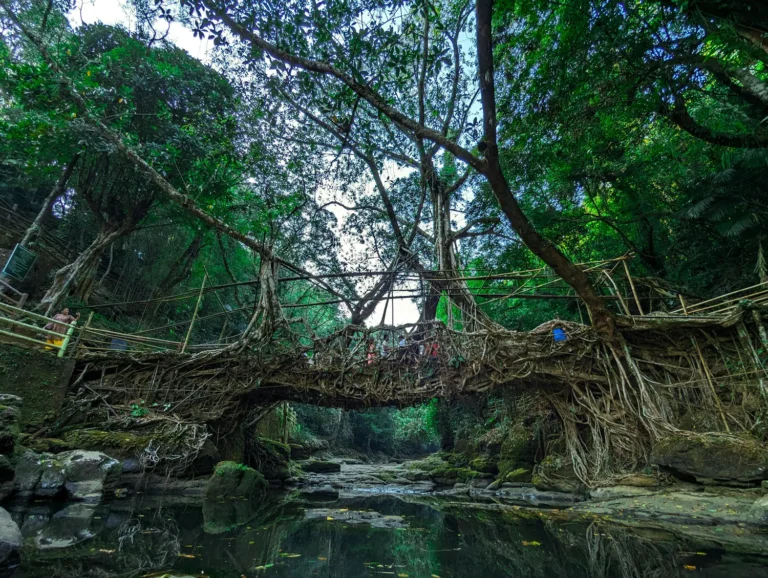
If your priority is experiencing the famous Double Decker Living Root Bridge at Nongriat, we recommend dedicating the majority of the day to it rather than trying to squeeze it between several other attractions.
The road takes you to Tyrna, from where the trek descends into the valley. Meghalaya Tourism describes the route as involving roughly 3,000–3,500 steps, and the climb back up is every bit as important to plan for as the descent.
Our advice is to start very early, carry sufficient water and allow the entire day. Reasonably fit travellers can manage the trek, but it is not a casual walk.
Once you reach Nongriat, the Double Decker Living Root Bridge is a remarkable example of traditional Khasi ecological knowledge. The bridges are grown by guiding the aerial roots of rubber fig trees until they form living structures capable of carrying people across streams and valleys.
If you have enough energy and daylight, Rainbow Falls can be considered as an extension. We would not recommend adding it simply to “complete the list” if you are already tired.
Drive to Tyrna: Allow roughly 30–45 minutes from Sohra.
Trek: Expect several hours for the descent, time at Nongriat and the climb back.
Difficulty: Moderate to strenuous because of the large number of steps.
Best approach: Treat Nongriat as a full-day experience.
For travellers who want to see a living root bridge without committing to the full Nongriat trek, consider a shorter root-bridge experience elsewhere in Meghalaya, depending on your wider travel route.
A Note From Our Team About Nongriat
We often see guests underestimate this trek because they focus on the distance rather than the elevation. The difficult part is not simply walking several kilometres—it is repeatedly climbing and descending thousands of steps.
If your knees are already tired from Day 1, do not feel that you have failed by choosing a gentler alternative. Meghalaya has plenty to offer beyond one attraction.
Evening: Back at the Resort
After Nongriat, there is very little we recommend other than a shower, a good meal and rest.
This is also why we like having different room categories at Jiva Resort. Couples and active travellers may find our Executive Suite, Superior Suite or Premium Suite ideal for a quiet recovery after a long day outdoors.
If you are travelling as a family or simply prefer more space, our Luxury Suite and Montara Suite are better suited to a slower evening with more room to unwind.
What to Pack for Day 2
- Sturdy trekking shoes with excellent grip
- At least one bottle of drinking water
- Lightweight rain protection
- Small backpack
- Snacks for the trek
- Quick-drying clothes
- Extra socks
- Waterproof pouch for phone and valuables
- Basic first-aid supplies
- Walking pole if you are accustomed to using one
Day 3: Mystical Valleys & Peaceful Horizons
After two active days, we deliberately make Day 3 less demanding. You will still see beautiful landscapes, but the schedule gives you more time to stop, photograph, breathe and enjoy Sohra rather than constantly watching the clock.
Morning: Garden of Caves
Begin with the Garden of Caves, a quieter attraction that combines natural rock formations, water features and greenery.
It is an especially pleasant choice after the physical effort of Nongriat because you can explore without committing to another several-hour trek.
As with almost every outdoor attraction in Sohra, expect uneven surfaces and potentially slippery areas after rain.
Best time: Morning, when you have plenty of daylight and a better chance of enjoying the area before afternoon weather changes.
Allow: Around 1–1.5 hours.
Late Morning: Thangkharang Park
Continue to Thangkharang Park, one of our preferred stops when guests want dramatic scenery without another demanding trek.
The park provides elevated views towards the deep valleys and surrounding landscape. On a clear day, the sense of scale is impressive; on a misty day, the scenery becomes softer and more atmospheric.
Do not be disappointed if you arrive and the valley is covered in cloud. Wait for a little while. In Sohra, visibility can change remarkably quickly.
Terrain: Relatively easy sightseeing with walking around the park.
Allow: Around 45 minutes to 1 hour.
Lunch: Take Your Time
Day 3 is where we recommend resisting the temptation to add five more attractions simply because you have time.
Have lunch, slow down and enjoy the fact that you are in the hills. If you return to Jiva Resort between sightseeing stops, our restaurant provides an easy opportunity to eat before continuing your afternoon.
Afternoon: Kynrem Falls
Finish the sightseeing portion of your three-day itinerary with Kynrem Falls.
Kynrem is one of the waterfalls that rewards travellers who appreciate the broader landscape rather than only the waterfall itself. The surrounding Khasi Hills give the falls a dramatic setting, particularly during the wetter months.
Give yourself enough time here to appreciate the view rather than treating it as a quick photograph-and-leave stop.
Best time: Afternoon, provided weather and visibility are favourable.
Terrain: Mostly viewpoint-style sightseeing, although surfaces can be wet or uneven.
Allow: Around 45 minutes to 1 hour.
Return to Jiva Resort for Your Final Evening
For your final evening in Sohra, we recommend keeping the schedule deliberately empty.
Return to the resort, have a relaxed dinner, sit by the fire if conditions permit and simply enjoy the mountain atmosphere. After three days of waterfalls, caves, forest paths and valley roads, a quiet evening is often one of the most memorable parts of the trip.
For guests looking to make their final night particularly special, our Horizon Suite is our premium flagship option. It offers expansive private space and panoramic hill views, along with a private plunge pool and jacuzzi, making it especially suited to travellers who want their accommodation itself to be part of the Meghalaya experience.
What to Pack for Day 3
- Comfortable walking shoes
- Light jacket or rain protection
- Water bottle
- Camera or phone
- Small daypack
- Light warm layer for the evening
Where to Stay in Cherrapunjee for a 3-Day Itinerary
Accommodation makes more difference to a three-day Sohra trip than many first-time visitors realise. After spending most of the day outdoors, you want somewhere comfortable enough that you can genuinely recover before the next morning.
At Jiva Resort, we recommend choosing your room according to how you intend to travel rather than simply choosing the largest room available.
Affordable Tier: For Active Couples and Explorers
Our Executive Suite King/Twin, Superior Suite and Premium Suite are well suited to guests who expect to spend most of their days exploring.
If your itinerary includes Wei Sawdong, Arwah Cave and the Living Root Bridge, you may value a peaceful, comfortable room and a good night’s sleep more than additional living space.
Explore our rooms in Cherrapunjee to compare the available options.
Mid-Range Tier: For Families and Extra Space
For families or couples who want more room to spread out, we recommend the Luxury Suite or Montara Suite.
Private sit-out space and additional room can be particularly valuable when you are travelling with children or simply want somewhere comfortable to spend an afternoon if rain changes your sightseeing plans.
Premium Flagship Tier: Horizon Suite
For travellers who want the accommodation to be a major part of the holiday, the Horizon Suite offers the most indulgent experience in our collection.
With generous private space, panoramic surroundings, a private plunge pool and jacuzzi, it is designed for guests who want to slow down and enjoy the cloudscapes of Sohra from the privacy of their own accommodation.
You can also read more about why travellers choose our property as a best resort in Cherrapunjee option.
Why We Recommend Staying Three Nights
If your schedule permits, three nights is considerably more comfortable than trying to experience Sohra through a rushed two-night stay.
You can wake up early without beginning the day exhausted, return to the resort between activities when necessary, and leave room for the weather to change your plans.
Complete Cherrapunji Packing List
For this particular three-day itinerary, we would pack for both rain and walking. Do not assume that a clear morning means you can leave the rain jacket behind.
- Footwear: One pair of proper walking/trekking shoes with good grip.
- Rain protection: Lightweight waterproof jacket or poncho.
- Clothing: Quick-drying clothes plus a warm layer for evenings.
- Backpack: Small daypack rather than a large travel backpack.
- Water: Reusable water bottle.
- Electronics: Power bank and waterproof phone protection.
- Health: Personal medicines and a small basic first-aid kit.
- Sun protection: Sunglasses, sunscreen and a cap.
- Cash: Keep some cash for local shops, snacks and applicable entrance charges.
- For Nongriat: Extra socks, snacks and sufficient water.
We would also avoid carrying an umbrella on steep trails such as Wei Sawdong. A rain jacket leaves both hands available for balance.
Local Tips for a Smoother Cherrapunji Trip
1. Start Earlier Than You Think
Early mornings are valuable not only for avoiding crowds but also for giving yourself more daylight when weather or road conditions slow you down.
2. Do Not Schedule the Living Root Bridge as a Quick Stop
The Nongriat trek is a serious physical outing. Give it the time it deserves and start early.
3. Bring Grip, Not Fashion
Slippery stone, wet cave surfaces and muddy forest trails are normal around Sohra. Good footwear is one of the best investments you can make for this trip.
4. Expect the Weather to Change
Mist is not a travel failure. Sometimes the cloud clears after ten minutes; sometimes it stays. Keep alternative attractions in mind rather than forcing the schedule.
5. Keep Your Camera Protected
Sohra’s rain and mist can appear suddenly. A simple waterproof pouch can save your phone or camera from an expensive accident.
6. Respect Local Communities and the Landscape
Many attractions around Sohra are located close to villages and community-managed areas. Do not litter, avoid damaging vegetation or rock formations, and follow local instructions and designated paths.
7. Do Not Try to See Everything
This is perhaps our most important recommendation. Cherrapunjee is best experienced at a human pace. Three memorable stops enjoyed properly are better than eight rushed photographs.
Frequently Asked Questions About a 3-Day Cherrapunji Itinerary
Is 3 days enough for Cherrapunji?
Yes. Three full days are enough to experience many of Sohra’s major waterfalls, caves, viewpoints and living-root attractions. The key is grouping attractions geographically and accepting that you cannot see everything.
What is the best order for a 3-day Cherrapunji trip?
For a balanced first visit, we recommend waterfalls on Day 1, caves and living-root architecture on Day 2, and quieter viewpoints and natural attractions on Day 3.
Is the Double Decker Living Root Bridge suitable for everyone?
No. The Nongriat route involves roughly 3,000–3,500 steps into and out of the valley. It is best suited to travellers who are comfortable with prolonged uphill and downhill walking.
Should I visit Wei Sawdong Falls?
Yes, if you are comfortable with steep and uneven terrain. The waterfall is beautiful, but the descent and especially the return climb require considerably more effort than a normal viewpoint visit.
What should I wear in Cherrapunji?
Wear comfortable, quick-drying clothing and shoes with good grip. Always carry rain protection because weather conditions can change quickly.
Is Cherrapunji suitable for a family holiday?
Yes, although individual attractions vary considerably in difficulty. Mawsmai Cave and many viewpoints are much easier than the Nongriat trek or the descent to Wei Sawdong.
Where should I stay for a three-day Cherrapunji itinerary?
We recommend staying in or around Sohra so that you can begin sightseeing early and avoid unnecessary long-distance commuting each morning. At Jiva Resort, guests can choose from comfortable suites for active travellers, larger suites for families and the premium Horizon Suite for a more indulgent stay.
Can I do this itinerary during the monsoon?
Yes, but you should expect wetter trails, slippery surfaces, changing visibility and longer road journeys. The waterfalls can be particularly dramatic during the rainy season, but outdoor plans should remain flexible.
What is the biggest mistake first-time visitors make in Cherrapunji?
Trying to fit too many attractions into one day. The distances may look short, but terrain, weather, crowds and road conditions can make sightseeing slower than expected.
Your 3-Day Cherrapunji Journey Starts Here
A good Meghalaya itinerary is not simply a list of attractions. It is a rhythm: an early start, a winding road through the Khasi Hills, the sound of a waterfall somewhere below the cliffs, a cave that takes you underground, a long forest trail, a plate of warm food afterwards and finally the quiet of your room as clouds move across the hills.
Our guests often arrive in Sohra wanting to photograph its famous waterfalls and leave talking about something much smaller—a village path, a sudden break in the mist, a conversation with a local, or the feeling of sitting quietly after a long trek.
That is the experience we hope this itinerary helps you find.
When you return to the resort in the evening, whether you have spent the day climbing thousands of steps or simply exploring the valleys at an easy pace, we want Jiva to feel like the place where you can finally slow down.
Explore Jiva Resort Cherrapunjee, browse our rooms and suites, or check room availability for your Cherrapunjee stay.