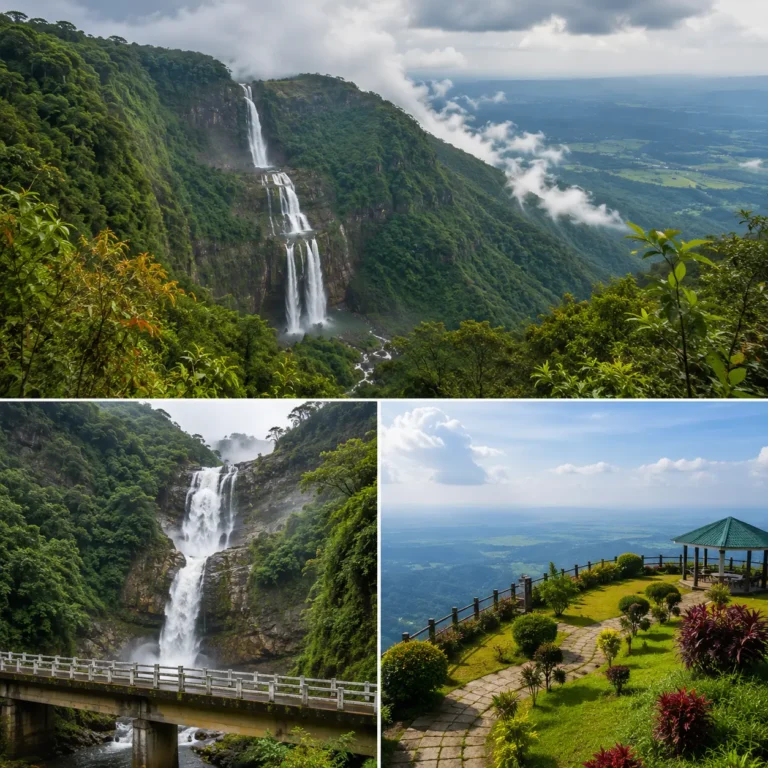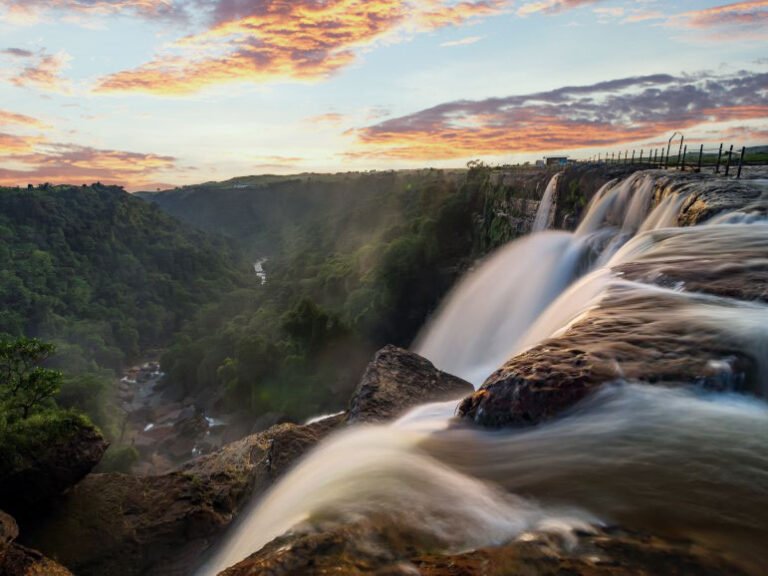

Nohkalikai Falls is one of the most spectacular natural attractions in Meghalaya and a must-visit destination for anyone exploring Cherrapunji (Sohra). Towering at approximately 340 metres (1,115 feet), it is widely recognised as the tallest plunge waterfall in India. Surrounded by dramatic cliffs, rolling clouds, and lush green valleys, the waterfall offers breathtaking views throughout the year, making it a favourite among nature lovers, photographers, families, and couples alike.
Beyond its remarkable beauty, Nohkalikai Falls is deeply rooted in Khasi folklore, giving visitors an opportunity to experience both the natural and cultural heritage of Meghalaya. Whether you’re planning a short sightseeing trip or a longer holiday through the Khasi Hills, understanding the best time to visit, how to reach the viewpoint, entry fees, nearby attractions, and practical travel tips can make your journey far more enjoyable.
This comprehensive guide covers everything you need to know before visiting Nohkalikai Falls, including its fascinating history, the legendary story behind its name, seasonal travel advice, visitor facilities, nearby places to explore, and recommendations on where to stay for convenient access to Cherrapunji’s top attractions.
Table of Contents
- Quick Information
- About Nohkalikai Falls
- The Legend Behind Nohkalikai Falls
- Why Visit Nohkalikai Falls
- Best Time to Visit
- Suggested Itinerary
- Timings and Entry Fee
- How to Reach
- Parking and Visitor Facilities
- Things to Do
- Nearby Attractions
- Travel Tips
- Frequently Asked Questions
- Stay Near Nohkalikai Falls
- Conclusion
Quick Information
Before diving into the detailed Cherrapunji travel guide, here is a quick overview of essential statistics and logistics for planning your excursion to Nohkalikai Falls.
| Category | Details |
|---|---|
| Location | Cherrapunji (Sohra), Meghalaya, India |
| Height | 1,115 feet (340 meters) |
| District | East Khasi Hills |
| Timings | 8:00 AM to 5:00 PM (Daily) |
| Entry Fee | INR 20 per person (approx) |
| Parking Fee | INR 20 – INR 50 (based on vehicle type) |
| Best Time to Visit | September to November for clear views; June to August for peak water volume |
| Approximate Visit Duration | 1 to 2 hours |
| Distance from Shillong | Approximately 54 kilometers |
| Distance from Cherrapunji Center | Approximately 7.5 kilometers |
| Nearest Airport | Umroi Airport (Shillong) / Lokpriya Gopinath Bordoloi International Airport (Guwahati) |
| Nearest Railway Station | Guwahati Railway Station |
About Nohkalikai Falls
Understanding the geological and geographical significance of Nohkalikai Falls Meghalaya adds immense value to your visit. This towering natural wonder is a quintessential representation of the unique topography that defines the East Khasi Hills.
Geography and Landscape
Perched on the edge of the Cherrapunji plateau, Nohkalikai Falls is fed by the rainwater collected on the summit of a relatively small catchment area. Because Cherrapunji is renowned as one of the wettest places on Earth, receiving phenomenal amounts of rainfall during the monsoon, the waterfall experiences dramatic fluctuations in its volume based on the season. The water flows off the forested plateau and plunges vertically down a steep, red-hued rocky cliff side, creating a mesmerizing contrast with the lush green vegetation clinging to the rock face.
Formation and the Plunge Pool
As a classic plunge waterfall, the water of Nohkalikai loses contact with the bedrock as it falls, plunging straight downward. Over countless millennia, the sheer force of this falling water has carved out a remarkably deep plunge pool at the base of the cliffs. During the winter and pre-monsoon months, when the water volume subsides, this pool transforms into a striking, vivid turquoise or gemstone-blue color. This distinct coloration is caused by the depth of the water and the specific mineral composition of the surrounding rocks, offering one of the most photographed sights in all of Meghalaya.
Interesting Facts
- Record Heights: With a drop of 340 meters (1,115 feet), it is widely recognized as the tallest plunge waterfall in India and consistently ranks among the highest waterfalls in the world.
- Rain-Fed Wonder: Unlike river-fed waterfalls, Nohkalikai’s strength is directly tied to the region’s famous monsoon rains.
- Ever-Changing Visibility: Due to the high altitude and unique microclimate of Sohra, the waterfall can be completely obscured by thick white fog one minute, and perfectly visible under bright sunshine the next.
The Legend Behind Nohkalikai Falls
The breathtaking beauty of Nohkalikai Falls Cherrapunji is sharply juxtaposed by a dark, heartbreaking local legend that gives the waterfall its name. In the local Khasi language, “Noh” translates to “leap” or “jump,” “Ka” is a prefix denoting a female, and “Likai” is a woman’s name. Thus, Nohkalikai translates to “The Leap of Likai.”
According to Khasi folklore, a young woman named Likai lived in the village of Rangjyrteh, near the precipice of the waterfall. After the death of her husband, Likai was left to care for her infant daughter. To provide for her child, she had to work grueling hours as a porter. Believing her daughter needed a father figure, Likai eventually remarried. However, her new husband grew intensely jealous of the time and affection Likai showered upon her daughter.
One fateful day, while Likai was away at work, the jealous husband committed a horrific act: he killed the child and cooked a meal with her remains. When Likai returned home, exhausted and hungry, she asked for her daughter. Her husband feigned ignorance, suggesting the child was playing outside, and offered Likai the meal he had prepared. Unknowingly, she consumed the food. After eating, she sought her customary betel nut basket, only to discover severed fingers hidden within it.
The realization of what she had eaten and the murder of her beloved child drove Likai mad with grief and horror. Screaming in agony, she ran blindly from her home, clutching a traditional Khasi machete, and threw herself off the towering edge of the plateau into the gorge below. Today, the majestic Nohkalikai Falls serves as a poignant, eternal memorial to a mother’s devastating loss, adding a layer of deep emotional resonance to the site’s natural splendor.
Why Visit Nohkalikai Falls
As one of the premier tourist attractions in Cherrapunji, Nohkalikai offers an experience that appeals to a wide variety of travelers. Here is why this destination should be at the top of your Meghalaya itinerary.
Scenic Beauty and Photography
For photographers and nature enthusiasts, Nohkalikai is nothing short of paradise. The panoramic viewing gallery offers a commanding, unobstructed vantage point of the gorge. The contrast between the deep green canopy, the rusted rock faces, the roaring white water, and the emerald pool below creates a perfectly balanced composition. Whether you are using a professional DSLR or a smartphone, capturing the sheer scale of the Nohkalikai Falls height against the sprawling valley is incredibly rewarding.
A Perfect Stop for Families
Families traveling with children or elderly members will find Nohkalikai Falls to be a highly accessible attraction. Unlike many other Meghalaya waterfalls that require strenuous trekking, the main viewpoint for Nohkalikai is situated just a short walk from the parking area. The paved pathways and secure railings make it a safe and comfortable experience for visitors of all ages to witness nature’s grandeur without physical exertion.
A Romantic Setting for Couples
Couples and honeymooners frequently visit Nohkalikai to share a moment of quiet awe. The misty ambiance, the cool mountain breeze, and the dramatic landscape provide a deeply romantic backdrop. Walking along the viewpoint, sharing a warm cup of local tea as the clouds drift through the canyon, is a memory that couples treasure for a lifetime.
A Haven for Nature Lovers
Beyond the waterfall itself, the surrounding ecosystem is rich with biodiversity. Birdwatchers can spot various avian species native to the Khasi Hills soaring through the gorge. The dense forests clinging to the cliffs are home to unique flora, including rare orchids and ferns that thrive in this hyper-humid environment.
Sunrise vs Afternoon Visits
While the falls are stunning all day, timing can change the experience. An early morning visit (around sunrise) often guarantees clearer views before the afternoon clouds roll in from the Bangladesh plains. However, an afternoon visit, when the sun strikes the mist, can occasionally reward lucky travelers with spectacular rainbows arching across the gorge.
Best Time to Visit
Understanding the best time to visit Nohkalikai Falls is crucial for managing your expectations, as the waterfall’s appearance alters drastically with the seasons.
Monsoon (June to September)
The Pros: If you want to witness the raw, terrifying power of Nohkalikai, the monsoon is the time to go. Fed by torrential rains, the falls swell to massive proportions, roaring down the cliff face with a deafening sound. The sheer volume of water is a spectacular display of nature’s force.
The Cons: The primary drawback of a monsoon visit is the dense fog. Cherrapunji is famous for its thick, white clouds that can completely engulf the gorge, reducing visibility to zero. You may have to wait patiently at the viewpoint for the clouds to part temporarily to get a glimpse of the falls. Additionally, heavy rains can make road travel challenging.
Autumn and Post-Monsoon (October to November)
The Pros: This is arguably the absolute best time to visit Nohkalikai Falls. The heavy rains have subsided, meaning the skies are generally much clearer, offering excellent visibility. Crucially, the catchment area is still saturated, so the water volume remains highly impressive. The surrounding hills are lush and vibrantly green, making for picture-perfect landscapes.
The Cons: Because this is peak tourist season, the viewpoints can get crowded, especially on weekends and holidays.
Winter and Spring (December to May)
The Pros: Winter offers the clearest skies and crisp, cool weather. It is during these dry months that the famous plunge pool at the bottom settles and reveals its stunning, deep turquoise color. It is a fantastic time for landscape photography without the interference of fog.
The Cons: As a rain-fed waterfall, the water volume reduces significantly during the dry season. By February and March, the roaring cascade diminishes to a much smaller stream. While the pool is beautiful, you will miss the dramatic power of the falls seen during wetter months.
Suggested Half-Day Itinerary
- 8:00 AM – Arrive at Nohkalikai Falls
- 9:00 AM – Tea at local stalls
- 10:00 AM – Visit Mawsmai Cave
- 11:30 AM – Explore Arwah Cave
- 1:00 PM – Lunch
- 2:30 PM – Wei Sawdong Falls
Timings and Entry Fee
Planning your visit requires noting the Nohkalikai Falls timing and associated costs.
- Timings: The viewpoint is generally open to visitors from 8:00 AM to 5:00 PM every day of the week. It is highly recommended to arrive before 4:00 PM, as daylight fades quickly in the Northeast, and the valley can become engulfed in shadows and mist by late afternoon.
- Entry Fee: Access to the Nohkalikai Falls viewpoint is very affordable. The Nohkalikai Falls entry fee is approximately INR 20 per adult.
- Additional Charges: There may be a nominal fee (around INR 20) if you are carrying a DSLR or professional camera.
Note: Prices and timings are subject to slight changes by local authorities; carrying small denominations of cash is always advisable.
How to Reach Nohkalikai Falls
Navigating the winding roads of Meghalaya is part of the adventure. Here is how to reach Nohkalikai Falls from major regional hubs.
From Cherrapunji (Sohra) Town Center
If you are already staying in Sohra, reaching the falls is a breeze. It is located just about 7.5 kilometers from the main market area. You can easily hire a local yellow and black taxi to drop you at the viewpoint and wait for you. The drive takes less than 20 minutes through scenic, grassy plateau landscapes.
From Shillong
Shillong, the capital of Meghalaya, is the primary basecamp for most tourists. Nohkalikai Falls is approximately 54 kilometers from Shillong.
- By Taxi: You can hire a private cab from Police Bazar in Shillong for a full-day Cherrapunji sightseeing tour, which will include Nohkalikai. The journey takes about 1.5 to 2 hours, depending on traffic.
- By Self-Drive: The road connecting Shillong to Cherrapunji (NH106) is one of the most beautiful drives in the region, featuring smooth tarmac, winding curves, and breathtaking valley views.
- By Public Transport: Shared sumos and buses run regularly from Bara Bazar in Shillong to Cherrapunji town. From there, you will need to hire a local taxi to reach the falls.
From Guwahati
If you are traveling directly from Assam, Guwahati is your starting point. The distance is roughly 150 kilometers, and the drive takes about 4.5 to 5.5 hours. It is highly recommended to break the journey with a stay in Cherrapunji rather than attempting a grueling day trip from Guwahati.
Parking and Visitor Facilities
The local tourism board and community have developed the area around the viewpoint to cater to visitors.
- Parking: There is a designated, paved parking lot situated right next to the entrance gate. A small parking fee is collected by local attendants.
- Washrooms: Basic public restroom facilities are available near the parking area for a nominal fee.
- Accessibility: The main viewpoint gallery is accessible via a short, flat paved walkway, making it easy for wheelchairs and strollers to get a decent view of the gorge, though reaching the highest vantage points involves a few steps.
Things to Do at Nohkalikai Falls
While admiring the cascade is the primary activity, there are several other engaging things to do at Nohkalikai Falls.
Explore the Viewpoints
There isn’t just one spot to view the falls. A paved pathway runs along the rim of the gorge, offering multiple viewing decks. Take the time to walk the entire length of the path. Each angle provides a different perspective of the waterfall, the plunge pool, and the vast, sweeping valley that stretches out toward the Bangladesh plains.
Shop for Local Meghalayan Goods
The approach to the viewpoint is lined with vibrant local stalls run by Khasi villagers. This is an excellent place to pick up authentic regional products. Keep an eye out for:
- Fresh Cinnamon and Bay Leaves: Cherrapunji is famous for its high-quality spices.
- Local Honey: Wild forest honey sold in glass bottles is a must-buy.
- Handicrafts: Traditional bamboo and cane products, hand-woven shawls, and wooden souvenirs.
- Fruits and Snacks: Try the locally grown oranges (in season), pineapples, and freshly boiled corn.
Photography Expeditions
Spend time experimenting with your camera. Use a tripod to capture long-exposure shots of the misty water, or utilize a polarizing filter to bring out the intense blues of the plunge pool and the rich greens of the forest. The constantly shifting fog also allows for dramatic time-lapse photography.
Nearby Attractions
A trip to Nohkalikai is rarely a standalone event. The Cherrapunji plateau is dense with natural wonders. Utilizing a comprehensive Cherrapunji Travel Guide will help you map out your days. Here are the top sites to combine with your visit:
Mawsmai Cave
Just a short drive away lies one of Meghalaya’s most famous accessible cave systems. Mawsmai Cave offers a thrilling walk through ancient limestone formations, featuring stunning stalactites and stalagmites. It is well-lit and perfectly suited for families wanting a safe caving experience.
Arwah Cave
For those seeking a slightly more rugged and atmospheric spelunking experience, Arwah Cave is spectacular. Known for its distinct fossil formations visible right on the cave walls and a beautifully forested approach walk, it is a haven for history and nature buffs alike.
Wei Sawdong Falls
If you prefer off-the-beaten-path destinations, Wei Sawdong Falls is a must-visit. This stunning three-tiered waterfall requires a steep, adventurous trek down a bamboo trail, rewarding intrepid travelers with a pristine, crystal-clear pool surrounded by dense jungle.
Dainthlen Falls
Another iconic waterfall intertwined with Khasi folklore, Dainthlen Falls features a wide, rocky riverbed that abruptly drops into a gorge. It is famous for the legend of a massive serpent (Thlen) that was slain on the very rocks near the falls.
Double Decker Living Root Bridge
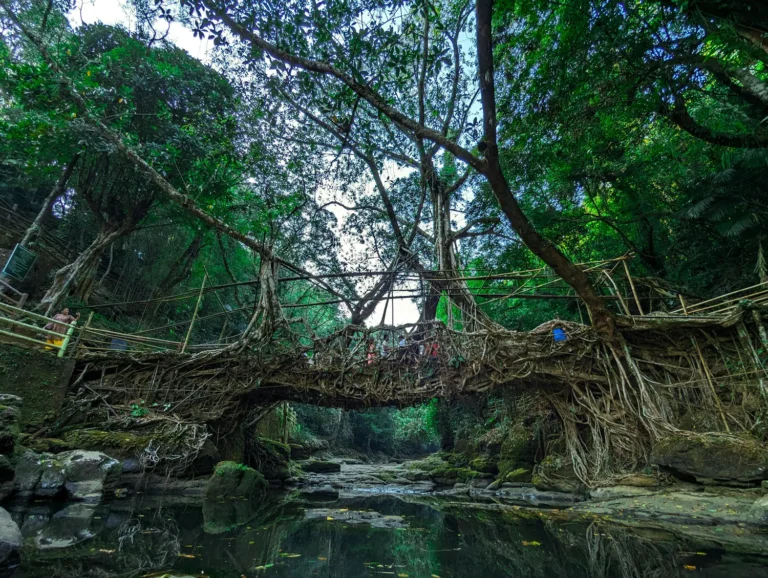
Though it requires a full day and a grueling trek down thousands of steps to the village of Nongriat, the Double Decker Living Root Bridge is an architectural marvel of bioengineering unique to Meghalaya. It is a bucket-list experience for fit and adventurous travelers.
Seven Sisters Falls
Also known as Nohsngithiang Falls, this wide waterfall features seven distinct segments dropping over limestone cliffs. It is best viewed during the monsoon when all seven cascades are flowing heavily.
Eco Park
Designed by the Meghalaya government, Eco Park offers sweeping views of the Sylhet Plains of Bangladesh. The park features beautiful orchids, walking trails, and serves as the origination point for several waterfalls that drop down the southern slopes.
Travel Tips for a Perfect Visit
To ensure your trip to Nohkalikai Falls is seamless and enjoyable, keep these expert travel tips in mind:
- Carry an Umbrella and Raincoat: Cherrapunji’s weather is notoriously unpredictable. It can rain at any moment, even during the dry season. Always have rain gear handy.
- Wear Comfortable Footwear: While the viewpoint path is paved, walking shoes are recommended, especially if you plan to explore the stairs leading to higher viewpoints or combine your trip with cave visits.
- Bring Cash: Network connectivity can be spotty in the valleys, meaning UPI and card machines at local stalls or ticket counters may not work. Carry sufficient small denomination cash.
- Patience is Key: If you arrive and the waterfall is hidden by fog, do not leave immediately. The winds in Sohra move quickly, and the clouds often part after 15 to 30 minutes, revealing the magnificent falls.
- Respect the Environment: Meghalaya takes immense pride in its cleanliness. Do not litter at the viewpoints. Dispose of plastic wrappers and water bottles responsibly.
Frequently Asked Questions
What is the height of Nohkalikai Falls?
Nohkalikai Falls plunges from a height of 340 meters, or 1,115 feet. This staggering drop makes it the tallest plunge waterfall in India, offering a genuinely awe-inspiring sight as the water free-falls directly into the gorge below.
Is Nohkalikai Falls the highest waterfall in India?
It is widely considered the highest plunge waterfall in India. While there are tiered waterfalls (like Kunchikal Falls in Karnataka) that have a higher total elevation drop, Nohkalikai holds the record for the highest uninterrupted, single vertical drop.
Why is it named Nohkalikai?
The name translates to “The Leap of Likai” in the local Khasi language. It is named after a tragic local legend of a grief-stricken mother named Likai, who threw herself off the cliff after discovering her new husband had murdered her daughter.
What is the best time to visit Nohkalikai Falls?
The ideal time to visit is the post-monsoon season, from September to November. During this window, the skies are generally clear, providing excellent visibility, and the water volume remains powerful from the recent rains. Winter is best for seeing the blue plunge pool, while monsoon is best for witnessing maximum water volume (despite the fog).
How far is Nohkalikai Falls from Cherrapunji?
The waterfall is located approximately 7.5 kilometers from the main town center of Cherrapunji (Sohra). It is a quick and scenic 15 to 20-minute drive by taxi or private vehicle.
Can you swim in the pool at the bottom of Nohkalikai Falls?
No, swimming in the plunge pool is not permitted and is highly dangerous. The sheer force of the falling water creates dangerous undercurrents, and reaching the bottom requires an incredibly steep, unmarked, and treacherous descent that is not officially sanctioned for tourists.
Is there a trek to Nohkalikai Falls?
The main viewpoint requires no trekking; it is accessible via a short, paved walk from the parking area. There are unofficial, rugged trails used by local foragers that lead closer to the bottom, but these are dangerous and not recommended for standard tourists.
What are the timings for Nohkalikai Falls?
The viewpoint is open to the public daily from 8:00 AM to 5:00 PM. It is advisable to visit before 4:00 PM to ensure good natural light for viewing and photography before the evening mist sets in.
Is there an entry fee for Nohkalikai Falls?
Yes, there is a very nominal entry fee, usually around INR 20 per person. There are also small parking fees for vehicles, and potentially a minor fee for carrying professional cameras or drones.
How to reach Nohkalikai Falls from Guwahati?
From Guwahati, you must first drive toward Shillong and then continue on to Cherrapunji. The total journey is about 150 kilometers and takes roughly 4.5 to 5.5 hours by road. You can hire a private taxi directly from Guwahati or take a bus to Shillong and arrange local transport from there.
Are there food stalls near the viewpoint?
Yes, the entrance area has several local stalls offering snacks, tea, coffee, Maggie noodles, and fresh fruits. You will also find stalls selling local spices, honey, and handmade souvenirs.
Is the Nohkalikai Falls viewpoint wheelchair accessible?
The main viewing gallery and the paved pathway leading to it are generally flat and accessible for wheelchairs and strollers, allowing everyone to enjoy the spectacular view without climbing stairs.
Is it safe to visit Nohkalikai Falls during the monsoon?
Yes, the designated viewing galleries are safe during the monsoon. However, you should exercise caution on the wet, slippery pathways and be prepared for heavy rain and zero visibility due to fog. Travel on the winding hill roads to reach Cherrapunji should be done with a cautious driver during heavy downpours.
What other attractions are near Nohkalikai Falls?
Nohkalikai is situated near several other prominent attractions, including Mawsmai Cave, Arwah Cave, Eco Park, Seven Sisters Falls, and Dainthlen Falls, making it easy to create a full-day sightseeing itinerary.
Where should I stay when visiting Nohkalikai Falls?
To fully experience the magic of the region without rushing, it is highly recommended to stay in Cherrapunji. Jiva Resort offers luxurious accommodations perfectly positioned to give you easy access to Nohkalikai and other major attractions.
Stay Near Nohkalikai Falls: Experience Luxury at Jiva Resort
After a thrilling day exploring the majestic Nohkalikai Falls and the sprawling caves of Sohra, returning to a sanctuary of comfort and elegance is essential. For travelers seeking the perfect blend of natural beauty and premium hospitality, choosing the Best Resort in Cherrapunjee transforms a simple trip into an unforgettable vacation. Jiva Resort stands out as the premier destination for discerning guests.
Located conveniently close to major tourist attractions, Jiva Resort offers a serene escape with manicured landscapes, a sparkling swimming pool, and world-class dining at our in-house restaurant. To learn more about our commitment to luxury amidst nature, you can read About the Resort.
We offer a diverse array of exquisitely designed Rooms in Cherrapunjee to suit every type of traveler. Families and groups can spread out in the lavish Executive Suite King or the versatile Executive Twin Suite. Couples seeking romantic elegance often prefer the Luxury Suite or the breathtaking views from the Horizon Suite.
For those who desire elevated comfort, the Premium Suite and the thoughtfully appointed Superior Suite provide the perfect relaxing atmosphere. Guests looking for our most exclusive experience can indulge in the stunning Montara Suite, offering unparalleled privacy and premium amenities.
Ready to plan your Meghalayan adventure? Check Availability for your preferred dates, or Contact our dedicated hospitality team to assist you in curating the perfect itinerary.
Conclusion
Nohkalikai Falls is far more than just a cascading stream of water; it is a powerful display of nature’s majesty interwoven with the deep cultural fabric of Meghalaya. From the terrifyingly beautiful plunge over the red cliffs to the serene blue pool resting at the valley floor, every element of this destination demands admiration. Whether you visit during the roaring monsoon or the clear, crisp winter, the falls will leave an indelible mark on your travel memories. By planning your trip with this comprehensive guide, respecting the local environment, and pairing your adventure with a luxurious stay at Jiva Resort, your journey to the heart of Cherrapunji will undoubtedly be a resounding success. Pack your bags, embrace the mist, and prepare to witness the awe-inspiring Leap of Likai.