
Table of Contents
- Introduction
- Best Time to Visit Cherrapunjee
- Top Places to Visit in Cherrapunjee
- Things to Do in Cherrapunjee
- Suggested 2-Day Cherrapunjee Itinerary
- What to Pack for Cherrapunjee
- Local Food to Try in Cherrapunjee
- Travel Tips for First-Time Visitors
- Where to Stay in Cherrapunjee
- Frequently Asked Questions (FAQs)
Introduction

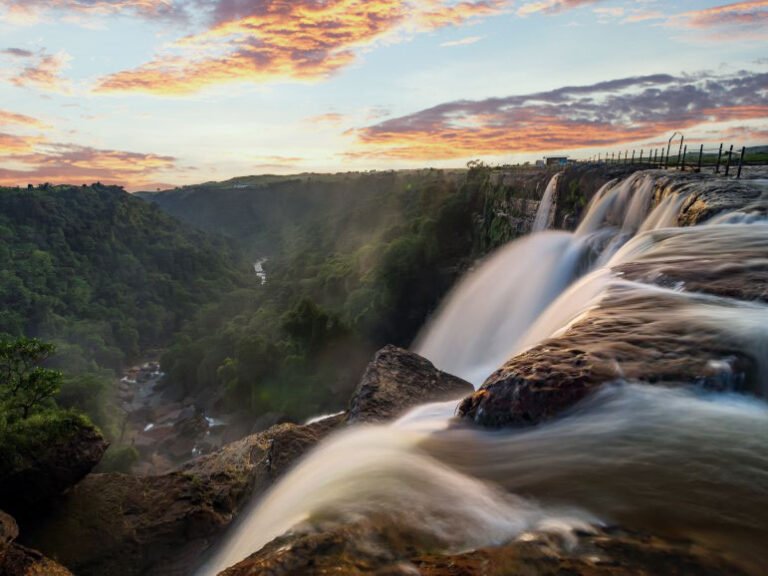
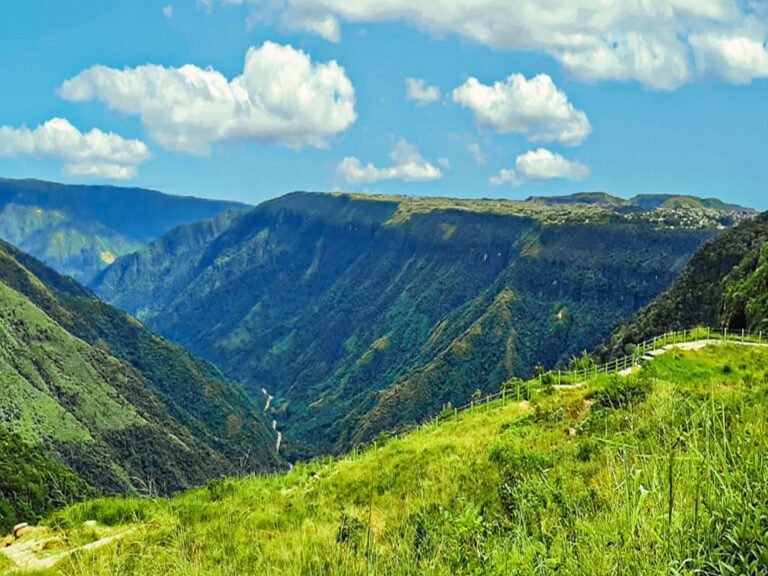
Nestled in the scenic East Khasi Hills of Meghalaya, Cherrapunjee—locally known as Sohra—is one of Northeast India’s most popular tourist destinations. This Cherrapunjee Travel Guide will help you discover the region’s breathtaking waterfalls, living root bridges, limestone caves, and stunning landscapes that attract travelers from across India and around the world. Once known as the wettest place on Earth, Sohra is famous for its dramatic weather, lush greenery, and unique natural attractions.
A major highlight of Cherrapunjee tourism is its incredible collection of natural wonders. Visitors can witness the majestic Nohkalikai Falls, explore the fascinating passages of Mawsmai Cave, and trek to the world-famous Double Decker Living Root Bridge near Nongriat. The region is also home to numerous viewpoints, hidden waterfalls, and scenic valleys that showcase Meghalaya’s remarkable beauty.
Beyond sightseeing, Cherrapunjee offers opportunities for trekking, nature photography, cave exploration, and experiencing the rich culture of the Khasi people. Mist-covered hills, deep gorges, and ever-changing cloud formations create a magical atmosphere throughout the year, making it one of the most rewarding destinations in Northeast India.
Whether you are planning a weekend getaway or a longer Meghalaya itinerary, understanding the seasons is essential for making the most of your trip. In the next section, we’ll explore the best time to visit Cherrapunjee and what you can expect during each season.
Best Time to Visit Cherrapunjee
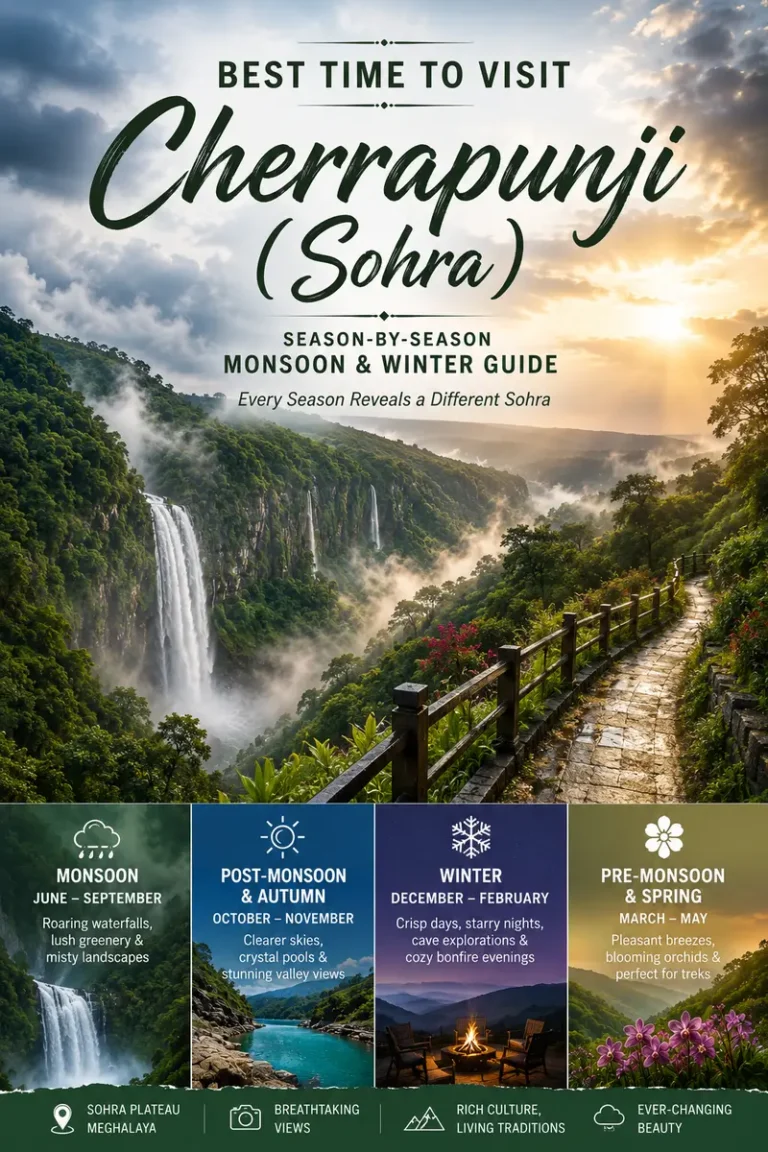
One of the unique aspects of visiting Sohra is that it can be explored throughout the year. However, the overall experience changes significantly with the seasons. From roaring waterfalls during the rainy months to clear panoramic views in winter, the Best Time to Visit Cherrapunjee depends on the type of experience you are looking for. Understanding seasonal variations in Cherrapunjee weather can help travelers plan their trip more effectively.
Summer (March to May)
Summer is considered one of the most comfortable seasons for sightseeing in Cherrapunjee. Temperatures generally range between 15°C and 25°C, making outdoor activities pleasant without the extreme heat experienced in many parts of India.
The landscape remains green from the previous months, while skies are often clearer than during the monsoon season. Waterfalls continue to flow, although they may not be as powerful as they are during peak rainfall.
Advantages of visiting in summer:
- Pleasant temperatures for outdoor exploration
- Comfortable conditions for trekking and nature walks
- Clearer views from viewpoints and valleys
- Ideal for photography and sightseeing
Popular activities:
- Exploring living root bridges
- Visiting caves such as Mawsmai Cave
- Sightseeing at viewpoints
- Photography tours
Things to keep in mind:
- Occasional pre-monsoon showers can occur.
- Carry light rain protection.
- Book transportation in advance during peak holiday periods.
For travelers seeking a balance between comfortable weather and outdoor exploration, summer is often an excellent time to visit.
Monsoon (June to September)
The monsoon season transforms Sohra into one of the wettest and most dramatic landscapes in the world. This is the period when Cherrapunjee in monsoon reveals its most iconic scenery. Heavy rainfall feeds rivers, waterfalls, forests, and valleys, creating spectacular natural views.
Many famous waterfalls reach their peak flow during these months. The surrounding hills become intensely green, while mist and clouds frequently drift through the valleys.
Advantages of visiting in monsoon:
- Waterfalls are at their most powerful and beautiful
- Lush green scenery throughout the region
- Unique cloud-covered landscapes
- Excellent opportunities for dramatic nature photography
Popular activities:
- Waterfall viewing
- Landscape photography
- Scenic drives
- Experiencing Cherrapunjee’s famous rainfall
Challenges during monsoon:
- Heavy rain may limit outdoor activities
- Trekking trails can become slippery
- Visibility at viewpoints may be reduced
- Road travel may occasionally be affected by weather conditions
Practical advice:
- Carry waterproof clothing and footwear.
- Protect electronics with waterproof covers.
- Allow flexibility in your itinerary due to changing weather.
- Check road and weather conditions before long excursions.
For travelers whose priority is witnessing the region’s waterfalls and experiencing its legendary rainfall, monsoon is unquestionably the most spectacular season.
Winter (October to February)
Winter is widely regarded as the most convenient season for tourism and general sightseeing. During this period, Cherrapunjee weather becomes cooler and relatively dry, with temperatures typically ranging between 5°C and 20°C.
The skies are often clear, providing excellent visibility of valleys, cliffs, and surrounding landscapes. While waterfalls may not be as dramatic as during the monsoon, many remain active and accessible.
Advantages of visiting in winter:
- Clear skies and excellent visibility
- Comfortable weather for sightseeing
- Safer trekking conditions
- Better road travel conditions
- Ideal for outdoor activities
Popular activities:
- Trekking to living root bridges
- Cave exploration
- Nature walks
- Sightseeing and photography
- Visiting viewpoints
Things to keep in mind:
- Early mornings and evenings can be quite chilly.
- Warm clothing is recommended.
- Some seasonal waterfalls may have reduced water flow.
Winter is especially suitable for travelers interested in covering multiple attractions efficiently and enjoying uninterrupted outdoor activities.
Which Season is Best for Different Activities?
- Best for waterfalls: Monsoon (June–September)
- Best for landscape photography: Monsoon for dramatic scenery; Winter for clear views
- Best for trekking: Winter (October–February)
- Best for sightseeing: Winter and Summer
- Best for pleasant weather: Summer (March–May)
- Best for experiencing Cherrapunjee’s famous rainfall: Monsoon (June–September)
What is the Best Time to Visit Cherrapunjee?
The answer depends on your travel preferences. If you want to witness Cherrapunjee’s famous waterfalls, lush greenery, and extraordinary rainfall, the monsoon season offers the most dramatic experience. For trekking, sightseeing, and comfortable exploration, winter is generally considered the best time to visit. Summer provides a good balance of pleasant weather and outdoor accessibility, making it another excellent choice for travelers following a complete Sohra travel guide itinerary.
Top Places to Visit in Cherrapunjee
Cherrapunjee (Sohra) is home to some of Meghalaya’s most iconic natural attractions. From towering waterfalls and ancient caves to living root bridges and scenic viewpoints, the region offers a diverse range of experiences for nature lovers and adventure seekers alike. The following are among the most popular places to visit in Cherrapunjee and should be included in any well-planned itinerary.
Nohkalikai Falls
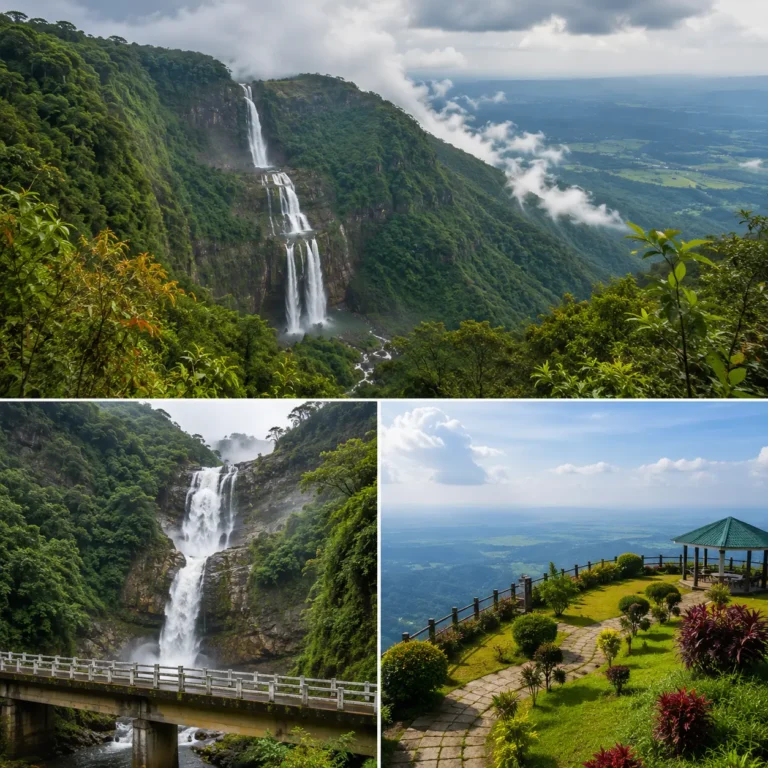
Nohkalikai Falls is one of the most famous tourist attractions in Cherrapunjee and is widely regarded as the tallest plunge waterfall in India. Cascading dramatically from a high cliff into a turquoise pool below, the waterfall creates one of the most breathtaking landscapes in Meghalaya.
The viewing area provides panoramic vistas of the surrounding valleys and cliffs, making it a favorite destination for photographers and sightseers. During the monsoon season, the waterfall reaches its full power, creating an unforgettable spectacle. In winter, visitors often enjoy clearer views and excellent visibility of the gorge below.
Highlights include:
- Spectacular panoramic viewpoints
- Dramatic waterfall scenery
- Photography opportunities throughout the year
- Beautiful sunrise and morning views on clear days
Nohkalikai Falls is easily accessible and suitable for visitors of all ages.
Double Decker Living Root Bridge
The Double Decker Living Root Bridge is one of the most unique natural wonders in Meghalaya and among the top things to do in Cherrapunjee. Created over generations by guiding the roots of rubber fig trees across streams, these living structures showcase the remarkable relationship between local communities and nature.
Reaching the bridge requires a challenging trek involving numerous steps, forest trails, and river crossings. While the journey can be physically demanding, the reward is one of the most extraordinary sights in Northeast India.
Visitors can expect:
- Dense forest scenery
- Natural pools and streams
- Traditional Khasi villages along the route
- A rare example of bio-engineering created by nature and human ingenuity
The trek is considered moderate to difficult, making it more suitable for reasonably fit travelers. Winter and post-monsoon months generally provide the most comfortable trekking conditions.
Mawsmai Cave
Among the most accessible caves in Meghalaya, Mawsmai Cave offers visitors an opportunity to experience Cherrapunjee’s fascinating limestone formations without undertaking a strenuous expedition.
The cave features narrow passages, naturally formed chambers, impressive stalactites, and stalagmites shaped over thousands of years. Artificial lighting in certain sections helps visitors appreciate the cave’s unique geological features while maintaining its natural atmosphere.
Why visit Mawsmai Cave:
- Suitable for most travelers
- Unique underground experience
- Interesting rock formations
- Excellent introduction to Meghalaya’s cave systems
Some sections can be narrow and slippery, so sturdy footwear is recommended. The cave can be visited throughout the year, though extra caution may be required during rainy periods.
Dainthlen Falls
Dainthlen Falls is a beautiful waterfall associated with Khasi folklore and local legends. Unlike plunge waterfalls, Dainthlen spreads across broad rocky terrain before descending dramatically into a deep gorge.
The surrounding landscape consists of expansive grasslands, rocky outcrops, and scenic viewpoints that offer excellent opportunities for photography. The area is often less crowded than some of Cherrapunjee’s more famous attractions, allowing visitors to enjoy a quieter experience.
Visitors appreciate Dainthlen Falls for:
- Wide waterfall formations
- Scenic cliffside viewpoints
- Cultural and legendary significance
- Peaceful natural surroundings
The waterfall is especially impressive during and immediately after the monsoon season when water volumes are at their highest.
Seven Sisters Falls
Seven Sisters Falls, also known as Nohsngithiang Falls, is among the most recognizable landmarks in Cherrapunjee. The waterfall consists of multiple parallel streams flowing down a massive cliff face, creating a striking visual effect that resembles seven separate waterfalls.
The falls become particularly spectacular during the monsoon when all seven streams are clearly visible. During drier months, some streams may reduce in volume, but the surrounding valley remains scenic and worth visiting.
Key attractions include:
- Multi-stream waterfall formation
- Vast valley views
- Excellent photography opportunities
- Beautiful sunset and evening scenery
For visitors interested in dramatic landscapes and iconic photography locations, Seven Sisters Falls remains one of the essential places to visit in Cherrapunjee.
Eco Park
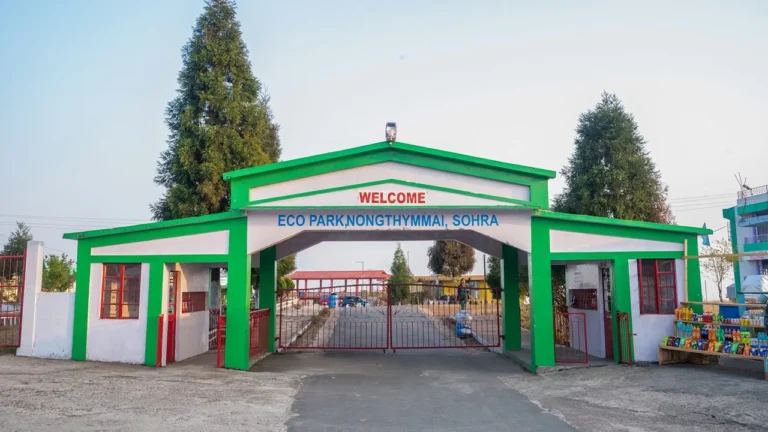
Eco Park is a well-maintained viewpoint area that offers sweeping views of the valleys and cliffs surrounding Cherrapunjee. Managed as a recreational and conservation space, the park provides an easy and accessible way to enjoy the region’s scenic beauty.
The landscaped grounds, open viewpoints, and walking paths make it a pleasant stop for families, casual travelers, and photographers.
Reasons to visit Eco Park:
- Wide panoramic views
- Accessible walking areas
- Scenic viewpoints overlooking deep valleys
- Ideal for relaxed sightseeing
During the monsoon season, visitors may also enjoy distant views of waterfalls cascading across the cliffs opposite the park.
Wei Sawdong Falls
Wei Sawdong Falls has become one of the most sought-after destinations in Cherrapunjee due to its stunning tiered structure and crystal-clear pools. The waterfall descends through multiple levels, creating a series of turquoise basins surrounded by lush vegetation and rocky cliffs.
The viewpoint itself is impressive, but many visitors choose to descend closer to the waterfall for a more immersive experience. The trail can be steep and requires caution, particularly after rainfall.
Highlights include:
- Multi-tiered waterfall formations
- Beautiful turquoise pools
- Excellent photography opportunities
- Less commercialized natural setting
The trek to the lower viewpoints is generally considered moderate and may not be suitable for travelers with mobility limitations. Winter and post-monsoon months often provide safer trail conditions and clearer views.
Things to Do in Cherrapunjee
Cherrapunjee, or Sohra, offers much more than just scenic viewpoints. From trekking through dense forests to exploring caves and witnessing some of India’s most spectacular waterfalls, there are plenty of memorable things to do in Cherrapunjee for nature lovers, photographers, and adventure seekers.
Waterfall Sightseeing
One of the biggest highlights of visiting Sohra is exploring its famous waterfalls. Nohkalikai Falls, Seven Sisters Falls, Dainthlen Falls, and Wei Sawdong Falls each offer a unique experience and showcase the dramatic landscapes that define the region.
During the monsoon season, the waterfalls are at their most powerful, while winter often provides clearer visibility for photography and sightseeing. Many waterfall viewpoints are easily accessible, making them suitable for visitors of all ages.
Trekking
Trekking is among the most rewarding activities in Cherrapunjee. The region’s valleys, forests, and traditional village trails provide opportunities to experience Meghalaya’s natural beauty up close.
Popular trekking experiences include:
- Double Decker Living Root Bridge trek
- Village-to-village forest trails
- Nature walks through limestone landscapes
- Exploration of river valleys and natural pools
Visitors should wear comfortable trekking shoes and be prepared for steep steps and uneven terrain on certain routes.
Living Root Bridge Experience
No visit to Sohra is complete without experiencing a living root bridge. These remarkable structures are formed by guiding the roots of rubber fig trees across streams over many decades.
The Double Decker Living Root Bridge is the most famous example and offers an unforgettable combination of trekking, nature, and local heritage. Walking across a bridge that continues to grow and strengthen naturally is one of the most unique experiences in Meghalaya.
Cave Exploration
Cherrapunjee is known for its extensive limestone formations and cave systems. Mawsmai Cave is the most accessible option and provides a fascinating introduction to the region’s underground landscapes.
Visitors can explore narrow passages, rock chambers, and naturally formed stalactites and stalagmites. Cave exploration adds a completely different dimension to a Cherrapunjee trip and is especially enjoyable during hot or rainy weather.
Nature Photography
Photography enthusiasts will find endless opportunities throughout Sohra. The combination of waterfalls, mist-covered valleys, dramatic cliffs, caves, forests, and cloud formations creates constantly changing scenery.
Some of the best photography subjects include:
- Waterfalls during monsoon
- Sunrise and sunset viewpoints
- Living root bridges
- Valley landscapes
- Traditional Khasi villages
- Cloud-covered hills and forests
Early morning is often the best time for landscape photography due to softer light and clearer conditions.
Local Khasi Culture and Food
Exploring local culture is another rewarding part of a Cherrapunjee visit. The Khasi people have a rich cultural heritage closely connected to nature and community traditions.
Visitors can experience local life by exploring village markets, interacting respectfully with local communities, and trying traditional Khasi cuisine. Regional dishes often feature locally sourced ingredients and offer a glimpse into the culinary traditions of Meghalaya.
Combining natural attractions with cultural experiences provides a more complete understanding of Sohra beyond its famous landscapes.
Suggested 2-Day Cherrapunjee Itinerary
For travelers with limited time, a well-planned 2 day Cherrapunjee itinerary can cover most of the region’s major attractions. This itinerary is best suited for first-time visitors who want to experience waterfalls, caves, viewpoints, and the iconic Double Decker Living Root Bridge.
Day 1: Waterfalls, Viewpoints, and Caves
The first day focuses on the most accessible and famous tourist attractions in Cherrapunjee.
Morning
Start early and visit:
- Nohkalikai Falls
- Nearby viewpoints and valley overlooks
Morning visits often provide better visibility before clouds and mist become more common later in the day.
Late Morning
Continue to:
- Mawsmai Cave
- Nearby scenic viewpoints
Since these attractions are located relatively close to one another, they can be conveniently grouped together to reduce travel time.
Afternoon
Visit:
- Seven Sisters Falls
- Eco Park
These attractions complement each other well and allow visitors to enjoy panoramic valley views and waterfall scenery without extensive hiking.
Evening
End the day at:
- Dainthlen Falls
- Sunset viewpoints if weather conditions permit
This schedule keeps driving distances manageable while covering several of the most popular locations in a single day.
Day 1 Travel Tip:
Group attractions by area rather than frequently driving back and forth across Sohra. Starting early also helps avoid crowds and maximizes sightseeing time.
Day 2: Double Decker Living Root Bridge Adventure
The second day focuses on one of the most memorable experiences in any Cherrapunjee itinerary.
Early Morning
Begin the trek to the Double Decker Living Root Bridge as early as possible. Starting early offers several advantages:
- Cooler temperatures
- Fewer visitors on the trail
- More time to explore without rushing
- Better energy levels for the return trek
During the Trek
Take time to enjoy:
- Forest scenery
- Traditional Khasi villages
- Natural pools and streams
- Photography opportunities along the route
The trek requires a reasonable level of fitness and includes numerous steps both descending and ascending.
Midday
Spend time at the Double Decker Living Root Bridge and nearby natural pools. Many visitors consider this the highlight of their entire Sohra itinerary.
Afternoon
Return at a comfortable pace and, if energy permits, visit nearby viewpoints or relax while enjoying the surrounding landscape.
Day 2 Travel Tip:
Carry sufficient drinking water, light snacks, and comfortable footwear. Avoid rushing the trek, as the journey itself is an important part of the experience.
Who Is This Itinerary Best For?
This Sohra itinerary is ideal for:
- First-time visitors
- Nature lovers
- Photographers
- Adventure travelers
- Weekend travelers with limited time
The itinerary balances sightseeing and adventure while minimizing unnecessary travel between attractions.
After planning your attractions and activities, the next step is preparing for Cherrapunjee’s unique weather conditions, which makes it important to understand what to pack and essential travel tips before your trip.
What to Pack for Cherrapunjee
Due to its unpredictable weather and outdoor-focused attractions, packing appropriately can significantly improve your travel experience. Whether you are visiting during the monsoon or winter, knowing what to pack for Cherrapunjee will help you stay comfortable while exploring waterfalls, caves, viewpoints, and trekking trails.
Rain Gear
Rain is a defining feature of Cherrapunjee’s climate, and showers can occur even outside the peak monsoon season.
Consider carrying:
- Lightweight waterproof jacket
- Compact umbrella
- Waterproof backpack cover
- Quick-dry clothing
During the monsoon months, waterproof gear becomes essential rather than optional.
Footwear
Many attractions involve walking on uneven terrain, forest trails, rocky surfaces, and stairways.
Recommended footwear includes:
- Comfortable trekking shoes
- Shoes with good grip and traction
- Quick-drying sandals for casual use
Avoid smooth-soled footwear, especially during the rainy season when trails can become slippery.
Warm Clothing
Although Cherrapunjee does not experience extreme winters, temperatures can feel cool due to rain, wind, and elevation.
Useful clothing items include:
- Light jacket or fleece
- Long-sleeved shirts
- Comfortable trousers
- Extra layers for early mornings and evenings
Winter visitors should carry warmer clothing, particularly between December and February.
Daypack
A small daypack is useful for carrying essentials while sightseeing or trekking.
Pack items such as:
- Water bottle
- Snacks
- Rain gear
- Power bank
- Personal medications
- Camera accessories
A lightweight backpack is especially useful during the Double Decker Living Root Bridge trek.
Camera Equipment
Photography is one of the most rewarding activities in Sohra. The constantly changing weather creates unique opportunities for capturing landscapes and waterfalls.
Photography gear may include:
- Camera or smartphone
- Spare batteries
- Memory cards
- Waterproof camera cover
- Lens cleaning cloth
Humidity and rain can affect equipment, so protective storage is recommended.
Personal Essentials
Do not forget basic travel necessities.
Suggested items include:
- Personal medications
- Sunscreen
- Insect repellent
- Reusable water bottle
- Identity documents
- Basic first-aid supplies
Being prepared allows visitors to enjoy the region’s outdoor attractions without unnecessary inconvenience.
Local Food to Try in Cherrapunjee
Exploring local cuisine is an important part of experiencing Meghalaya’s culture. The local food in Cherrapunjee reflects Khasi culinary traditions, with dishes that often emphasize simple preparation, fresh ingredients, and distinctive flavors.
Khasi Cuisine: A Brief Introduction
Khasi cuisine is known for its use of rice, meat, local herbs, and fermented ingredients. Traditional dishes are generally less spicy than many other Indian cuisines and focus on natural flavors rather than heavy seasoning.
Trying local food provides visitors with a deeper understanding of the region’s culture and way of life.
Jadoh
Jadoh is one of the most popular traditional Khasi dishes and is often considered a must-try food in Meghalaya.
The dish consists primarily of rice cooked with meat and aromatic ingredients, creating a hearty and flavorful meal. Variations can be found across different parts of the state, making it one of the most recognizable local specialties.
Dohneiiong
Dohneiiong is a traditional Khasi pork dish prepared with black sesame seeds.
The sesame-based gravy gives the dish its distinctive appearance and rich flavor. It is commonly served alongside rice and is a favorite among visitors looking to experience authentic Khasi cooking.
Tungrymbai
Tungrymbai is a fermented soybean preparation that holds an important place in Khasi cuisine.
Known for its strong aroma and unique taste, it is often cooked with local seasonings and served as a side dish. Visitors interested in regional culinary traditions may find it one of the most distinctive foods available in the area.
Pukhlein
Pukhlein is a traditional Khasi snack made from rice flour and jaggery.
Crisp on the outside and slightly sweet in flavor, it is commonly enjoyed as a light snack or tea-time treat. Its simple ingredients and traditional preparation make it a popular local delicacy.
Travel Tips for First-Time Visitors
A few practical Cherrapunjee travel tips can help visitors make the most of their trip while avoiding common challenges associated with weather, transportation, and outdoor activities.
Weather Preparation
Weather conditions can change rapidly in Sohra.
Keep in mind:
- Carry rain protection year-round.
- Check weather forecasts before outdoor activities.
- Expect sudden fog or reduced visibility.
- Dress in layers for changing temperatures.
Road Travel
Roads connecting Shillong and Cherrapunjee are generally scenic and well-traveled, but weather can affect driving conditions.
Useful tips include:
- Start sightseeing early in the day.
- Allow extra travel time during monsoon.
- Avoid rushing between attractions.
- Keep fuel and travel essentials ready before long excursions.
Cash and Payments
While digital payments are becoming increasingly common, visitors should not rely entirely on them.
It is advisable to:
- Carry sufficient cash for smaller purchases.
- Keep smaller denominations available.
- Expect occasional payment connectivity issues in remote areas.
Mobile Network Connectivity
Network coverage is generally available in major areas, but signal strength may vary depending on location and weather conditions.
Visitors should:
- Download maps before traveling
- Save important contact numbers offline
- Inform companions before heading on long treks
Trekking Preparation
Several major attractions involve moderate to strenuous walking.
Before trekking:
- Wear proper footwear
- Carry drinking water
- Start early in the day
- Travel at a comfortable pace
- Avoid trekking during severe weather conditions
Physical preparation can make activities such as the Double Decker Living Root Bridge trek significantly more enjoyable.
Responsible Tourism
Cherrapunjee’s natural beauty depends on responsible visitor behavior.
Help preserve the region by:
- Avoiding littering
- Staying on designated trails
- Respecting local customs and communities
- Avoiding damage to living root bridges and natural formations
- Carrying reusable bottles and bags whenever possible
Responsible travel helps protect these unique landscapes for future generations.
Where to Stay in Cherrapunjee
When planning a trip to Sohra, deciding where to stay in Cherrapunjee is an important part of creating a comfortable and efficient itinerary. The region offers a variety of accommodation options ranging from traditional homestays and budget guesthouses to boutique properties and full-service resorts. Each option provides a different experience, allowing travelers to choose accommodation that matches their budget, travel preferences, and sightseeing plans.
Homestays are popular among visitors who want a more local and community-oriented experience. They often provide opportunities to interact with local families and gain insight into Khasi culture and daily life. Guesthouses are another practical option for budget-conscious travelers looking for simple and convenient accommodation close to key attractions.
For travelers seeking additional amenities and more spacious surroundings, boutique stays and resorts offer a different style of experience. These properties typically provide larger rooms, dining facilities, and landscaped environments that allow guests to relax after a day of exploring waterfalls, caves, and trekking trails.
When selecting accommodation, it is helpful to consider your itinerary. Visitors planning a short weekend trip may benefit from staying near major sightseeing areas to reduce travel time between attractions. This can make it easier to visit locations such as Nohkalikai Falls, Mawsmai Cave, Seven Sisters Falls, and other popular destinations without spending excessive time on the road.
Among the accommodation options available in Sohra, Jiva Resort Cherrapunjee is one choice for families, couples, and nature travelers seeking a comfortable base while exploring the region. The property features spacious suites, scenic surroundings, and on-site dining experiences that allow guests to enjoy local and multi-cuisine meals during their stay. Its location also offers convenient access to several major attractions in and around Cherrapunjee, making it suitable for visitors following a packed sightseeing itinerary.
Check Room AvailabilityDuring peak travel periods such as the monsoon season, long weekends, and holiday months, it is advisable to book accommodation in advance, particularly if you plan to stay near Cherrapunjee’s major attractions.
Ultimately, the right accommodation depends on the type of experience you are looking for—whether that is a simple homestay, a budget-friendly guesthouse, a boutique property, or a resort with additional facilities. Choosing accommodation that aligns with your travel style can help make your Cherrapunjee visit more enjoyable and efficient.
Frequently Asked Questions (FAQs)
What is the best time to visit Cherrapunjee?
The best time to visit Cherrapunjee depends on the type of experience you want. The monsoon season (June to September) is ideal for seeing waterfalls at their most powerful and experiencing the region’s famous rainfall. Winter (October to February) offers clear skies, pleasant weather, and excellent conditions for trekking and sightseeing. Summer (March to May) provides a comfortable balance of mild weather and outdoor accessibility, making it another popular time to visit.
How many days are enough for Cherrapunjee?
Most travelers find that 2 to 3 days are sufficient to explore the major attractions in Cherrapunjee. A two-day trip allows visitors to cover highlights such as Nohkalikai Falls, Mawsmai Cave, Seven Sisters Falls, Dainthlen Falls, and the Double Decker Living Root Bridge. Those interested in additional trekking, photography, or exploring nearby villages may benefit from spending an extra day in the region.
Is Cherrapunjee worth visiting during the monsoon?
Yes, Cherrapunjee is particularly famous for its monsoon season. During this time, waterfalls are at their most spectacular, valleys become intensely green, and the landscape takes on a dramatic appearance. However, visitors should be prepared for heavy rainfall, slippery trails, and occasional visibility issues. Proper rain gear and flexible travel plans are recommended when visiting during the monsoon months.
How far is Cherrapunjee from Shillong?
Cherrapunjee is located approximately 50 kilometers from Shillong and is connected by a scenic mountain road. Travel time typically depends on road conditions, weather, and traffic. The journey itself is often considered one of the highlights of a Meghalaya trip, offering beautiful views of hills, valleys, and cloud-covered landscapes along the way.
Is the Double Decker Living Root Bridge trek difficult?
The Double Decker Living Root Bridge trek is generally considered moderate to difficult. The trail involves a large number of steps, steep sections, and a significant elevation change. While many first-time trekkers successfully complete it, a reasonable level of fitness is helpful. Starting early, carrying sufficient water, and wearing proper trekking shoes can make the experience more comfortable and enjoyable.
What are the top places to visit in Cherrapunjee?
Some of the most popular places to visit in Cherrapunjee include Nohkalikai Falls, the Double Decker Living Root Bridge, Mawsmai Cave, Dainthlen Falls, Seven Sisters Falls, Eco Park, and Wei Sawdong Falls. These attractions showcase the region’s waterfalls, caves, forests, and scenic viewpoints, making them essential stops for first-time visitors exploring Sohra.
What should I pack for a Cherrapunjee trip?
Visitors should pack according to the weather and planned activities. Essential items include a waterproof jacket, comfortable footwear, warm layers for cooler evenings, a daypack, personal medications, and a reusable water bottle. Travelers visiting during the monsoon should prioritize rain protection, while photographers may want waterproof covers for cameras and electronic equipment.
Is Cherrapunjee suitable for family trips?
Yes, Cherrapunjee is suitable for family trips, especially for families who enjoy nature and outdoor sightseeing. Attractions such as Nohkalikai Falls, Eco Park, Seven Sisters Falls, and Mawsmai Cave are accessible to most visitors. Families with young children or elderly travelers may prefer sightseeing-focused itineraries rather than physically demanding treks such as the Double Decker Living Root Bridge route.
Are mobile networks available in Cherrapunjee?
Mobile network coverage is available in most populated areas of Cherrapunjee, although signal strength can vary depending on location and weather conditions. Visitors may experience weaker connectivity in remote trekking routes, deep valleys, and certain rural areas. It is advisable to download maps, save important information offline, and avoid relying entirely on mobile data during outdoor excursions.
Where should I stay in Cherrapunjee?
Cherrapunjee offers a range of accommodation options including homestays, guesthouses, boutique stays, and resorts. The right choice depends on your budget, itinerary, and travel preferences. Travelers interested in local experiences may prefer homestays, while those seeking additional amenities can consider resorts or boutique properties. Jiva Resort Cherrapunjee is one accommodation option that offers spacious suites, dining facilities, and convenient access to several major attractions in the region.
Is Cherrapunjee and Sohra the same place?
Yes. Sohra is the local and official name of the town, while Cherrapunjee is the name by which it is more widely known among travelers. Both names refer to the same destination in Meghalaya’s East Khasi Hills district. Many tourism websites, maps, and travel guides use the terms interchangeably, so visitors should not be confused if they encounter either name while planning their trip.