
Table of Contents
- Kynrem Falls & Thangkharang Park at a Glance
- Understanding the Southern Valley Route
- How to Reach Kynrem Falls from Jiva Resort
- Exploring Kynrem Falls
- Visiting Thangkharang Park
- Ka Khoh Ramhah / Pillar Rock
- Half-Day & Full-Day Itineraries
- Best Time to Visit Kynrem Falls & Thangkharang Park
- Best Photography Spots
- What to Pack
- Where to Eat During Your Day Trip
- Where to Stay Near the Southern Sohra Route
- Local Team Travel Tips
- Frequently Asked Questions
- Plan Your Kynrem Falls Day Trip
Kynrem Falls & Thangkharang Park at a Glance
When our guests ask us at Jiva Resort about a quieter side of Cherrapunji, we often point them towards the southern valley road. While attractions such as Nohkalikai Falls and Mawsmai Cave receive much of the attention, the road towards Kynrem Falls offers a different experience: dramatic cliffs, deep valleys, forested slopes, open views towards the plains and a much slower sightseeing rhythm.
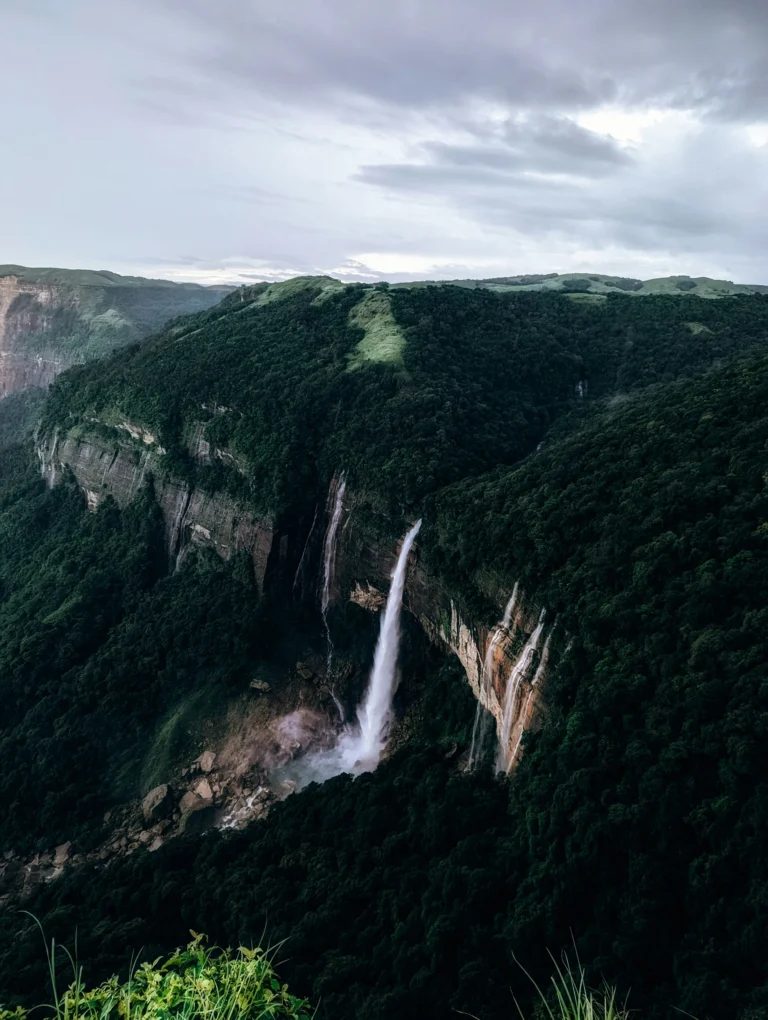
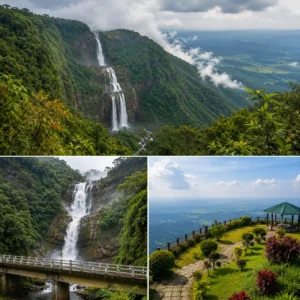
The centrepiece of this route is Kynrem Falls, a spectacular three-tiered waterfall that descends approximately 305 metres and is widely recognised as the seventh-highest waterfall in India. Its three distinct stages make it especially interesting because the waterfall changes character depending on where you view it from.
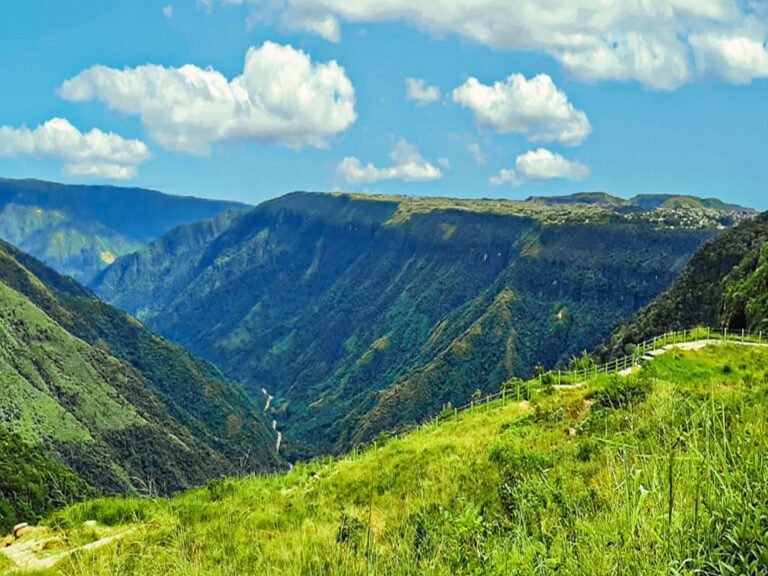
Close by is Thangkharang Park, a landscaped park positioned along the edge of the Sohra plateau. From the park, you can look across the southern valleys towards the plains of Bangladesh on a clear day.
The two attractions work particularly well together. Rather than treating them as isolated sightseeing stops, we recommend experiencing them as part of one scenic southern Sohra circuit.
If this is your first trip to the area, you can also combine this route with our 3-Day Cherrapunji itinerary, which places Kynrem Falls and Thangkharang Park within a broader three-day Meghalaya travel plan.
Understanding the Southern Valley Route
The journey towards Kynrem takes you away from some of the busiest sightseeing points around central Sohra and towards the southern escarpment.
We particularly enjoy this road because the landscape gradually changes as you travel. Instead of simply driving from one attraction to another, you move through sections of forest, open plateau and steep valley terrain.
On a clear day, the southern horizon opens considerably. During the monsoon, however, clouds and mist can transform the same landscape within minutes.
Why This Route Is Worth Your Time
- Kynrem Falls provides a dramatic three-tier waterfall experience.
- Thangkharang Park offers elevated valley and plains views.
- Khoh Ramhah adds an unusual geological landmark to the route.
- The southern road itself provides scenic viewpoints and changing landscapes.
- The route can be combined comfortably with other Sohra attractions.
It is also a good option when you want a sightseeing day that feels less repetitive. You are not spending the entire day looking at waterfalls; you are moving between waterfall viewpoints, gardens, rock formations and broad valley landscapes.
How to Reach Kynrem Falls from Jiva Resort
We always advise travellers to start early from our front gate, particularly if Kynrem Falls is only one part of a longer sightseeing day.
From Jiva Resort, the southern route towards Kynrem generally takes you through the Sohra-Shella side of the plateau. Depending on the exact route, traffic and road conditions, allow roughly 30–45 minutes of driving time to reach the Kynrem area.
Rather than relying too heavily on a precise kilometre figure, we recommend allowing a little flexibility. Hill-road travel in Sohra is affected by rain, mist, traffic and occasional road work.
What the Road Is Like
The main route is motorable, but this is not a road where we recommend driving aggressively to save ten minutes.
There are winding sections, changes in elevation and stretches where visibility can reduce considerably during rain or mist. During the monsoon, wet roads require additional caution.
The reward is the scenery. As you approach the southern side of the plateau, the landscape becomes increasingly dramatic, with forested slopes falling away towards the valleys.
Should You Hire a Taxi?
For visitors who are not comfortable driving in hilly terrain, we recommend hiring a local taxi for the day.
A local driver is particularly useful during the monsoon because they are familiar with the road, understand changing conditions and can help you organise several nearby stops without unnecessary backtracking.
If you are hiring a taxi, tell the driver at the beginning of the day that you want to cover Kynrem Falls, Thangkharang Park and Khoh Ramhah. If you also want to add attractions further along the route, discuss the complete itinerary before starting.
Our Recommended Departure Time
For a half-day visit, we recommend leaving between 7:00 and 8:00 AM.
For a full-day southern Sohra circuit, an even earlier departure is preferable. Starting early gives you time for photographs, unexpected weather delays and a relaxed lunch without having to rush back before evening.
Exploring Kynrem Falls
Kynrem Falls is one of those places where the viewpoint changes the entire experience.
The waterfall drops through three distinct tiers, and you can appreciate different portions of the cascade depending on where you stand along the route.
The Thangkharang Park View
The elevated viewpoint inside Thangkharang Park is one of the best places to appreciate the waterfall as a whole.
From higher ground, the scale of the falls becomes much easier to understand. Instead of seeing only one section of falling water, you can look across the green landscape and follow the waterfall as it descends through its different stages.
This is the viewpoint we recommend for your first photograph of Kynrem.
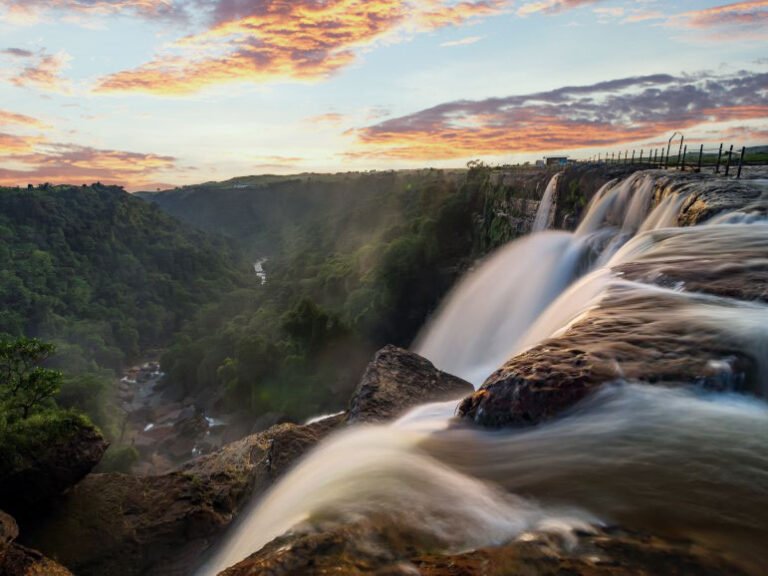
The Bridge Deck View
For a completely different perspective, continue down the road towards the lower section of Kynrem.
A small road bridge crosses the water near the lower portion of the falls. Standing here brings you much closer to the sound and atmosphere of the waterfall.
During periods of strong water flow, the experience can be remarkably powerful. You may hear the falls well before you reach the bridge, and in the monsoon the spray can reach the surrounding road area.
This is not the place to climb onto wet rocks simply for a better photograph.
Kynrem During High Water Volume
During the monsoon, Kynrem can change from a graceful multi-tier cascade into a powerful wall of water.
Additional streams may appear along the surrounding cliffs after heavy rain, making the entire escarpment feel alive with water.
Our team strongly recommends staying on established paths and viewing areas. Wet rocks can be extremely slippery, and the apparent distance between you and the falling water can be misleading.
Never climb onto rocks beside the falls for photographs during high-flow conditions. The photograph is not worth risking a fall.
How Long Should You Spend at Kynrem?
For a straightforward visit, allow around 45 minutes to 1 hour.
Photographers may want longer, particularly if the clouds are moving through the valley and visibility is changing.
If you are visiting during the monsoon, give yourself extra time. Waiting for a brief break in the mist can produce a completely different view.
Visiting Thangkharang Park
Thangkharang Park is more than simply a place to photograph Kynrem Falls.
The park occupies a beautiful section of the plateau edge and combines landscaped areas, vegetation, viewpoints and access to some of the region’s distinctive natural scenery.
Botanical Gardens and Green Spaces
After spending time around waterfalls, the park provides a slower environment in which to walk and appreciate the local vegetation.
We recommend not rushing through this part of the visit. Take a walk, look for birds and plants, and allow your eyes to adjust to the scale of the valley beyond the park.
Depending on the season, the vegetation can look dramatically different. The monsoon brings intense greenery, while the drier months provide clearer views across the plateau edge.
Views Towards the Bangladesh Plains
One of the most memorable aspects of Thangkharang Park is its position along the southern edge of the Sohra plateau.
On a clear day, the land falls away towards the plains of Bangladesh, creating an extraordinary sense of depth.
When mist settles across the valley, the view becomes completely different. Rather than seeing the plains, you may see layers of cloud moving through the escarpment.
This is one of those places where we tell guests to put the phone down for a few minutes.
Birdwatching Along the Plateau Edge
The combination of forest, open spaces and plateau-edge habitat also makes the park interesting for casual birdwatching.
You do not need to be a serious birder to enjoy this. Carry a pair of compact binoculars if you have them, move quietly and listen before looking.
Early morning is generally the best time for this kind of experience, which is another reason we recommend starting your southern route early.
How Much Time Should You Spend Here?
Allow approximately 1–1.5 hours for a relaxed visit, particularly if you want to explore the park rather than simply walk to the main viewpoint.
Ka Khoh Ramhah / Pillar Rock
If you have time, we strongly recommend adding Ka Khoh Ramhah to your southern Sohra route.
It is also known as Khoh Ramhah, Pillar Rock or Giant Basket, and its unusual shape makes it one of the more distinctive geological landmarks around Sohra.
The formation is particularly interesting because its appearance changes with weather and light. After rain, the surrounding landscape can become intensely green, while clearer weather reveals the rock against the broader southern landscape.
Why Combine It With Kynrem?
Geographically, these attractions work well together and provide a welcome change of scenery.
Instead of spending an entire afternoon at one waterfall, you can experience a waterfall, a botanical park, a major rock formation and expansive valley views within the same general route.
For a photographer, the combination is particularly worthwhile because each stop offers a different composition.
Half-Day & Full-Day Sightseeing Itineraries
Option 1: Relaxed Half-Day Route
This is our preferred option for guests who want to return to the resort for a relaxed afternoon.
- 7:30 AM: Breakfast at Jiva Resort.
- 8:00 AM: Depart from the resort.
- 8:30–9:30 AM: Explore Thangkharang Park and photograph Kynrem Falls from the elevated viewpoint.
- 9:30–10:15 AM: Continue to the lower Kynrem viewpoint and bridge.
- 10:30–11:15 AM: Visit Ka Khoh Ramhah / Pillar Rock.
- 11:15 AM onward: Begin the return journey.
- Around noon: Return towards Sohra for lunch.
This works particularly well for families, older travellers and guests who want to keep the afternoon free.
Option 2: Full-Day Southern Sohra Circuit
If you have a full day available, we recommend combining the southern route with several attractions rather than rushing through Kynrem and Thangkharang.
- 7:00 AM: Depart from Jiva Resort after breakfast.
- 8:00 AM: Thangkharang Park.
- 9:15 AM: Kynrem Falls lower viewpoint and bridge.
- 10:15 AM: Ka Khoh Ramhah / Pillar Rock.
- 11:30 AM: Continue exploring the southern route.
- 1:00 PM: Lunch break.
- 2:00 PM onward: Continue with selected nearby attractions depending on weather and energy levels.
- 4:00–5:00 PM: Begin the return journey towards the resort.
We would rather see guests remove one attraction from this schedule than spend the entire day watching the clock.
Combining Kynrem With the Rest of Sohra
If Kynrem is part of a larger Cherrapunji holiday, it can be paired with attractions such as Nohkalikai Falls, Dainthlen Falls, Wei Sawdong Falls and Mawsmai Cave on different days.
Our Nohkalikai Falls guide, Dainthlen Falls guide, Wei Sawdong Falls guide and Mawsmai Cave guide can help you build the rest of your itinerary.
Best Time to Visit Kynrem Falls & Thangkharang Park
The best season depends on whether you want maximum waterfall power or clearer landscapes.
Monsoon: June to September
If your priority is seeing Kynrem Falls at its most dramatic, monsoon is the season to consider.
Heavy rainfall feeds the waterfall and surrounding streams, turning the southern cliffs into a spectacular display of flowing water.
The trade-off is obvious: roads can be wet, mist can reduce visibility and the areas around waterfalls become slippery.
Our team recommends waterproof clothing, proper footwear and a flexible schedule during these months.
Post-Monsoon: October to November
For many travellers, this is an excellent compromise.
The landscape remains green, water levels can still be impressive and visibility often improves compared with the peak rainy period.
This is particularly attractive for photographers who want both waterfalls and open valley views.
Winter: December to February
Winter brings a calmer version of the southern route.
Days can be crisp and comfortable for sightseeing, while clearer weather can provide excellent long-distance views from the plateau edge.
Kynrem’s water flow can be substantially lower than during the monsoon, so travellers visiting specifically for a roaring waterfall may prefer the wetter months.
However, if your priority is clear scenery, relaxed driving and comfortable walking, winter is a very pleasant time to visit.
Spring and Pre-Monsoon: March to May
Spring can provide comfortable outdoor conditions, greenery and pleasant breezes, but showers can begin appearing as the monsoon approaches.
Carry rain protection even if the morning begins sunny.
For a broader month-by-month explanation of Sohra weather, see our best time to visit Cherrapunji guide.
Best Photography Spots Around Kynrem & Thangkharang
1. Thangkharang Park Viewpoint
This is our first recommendation for capturing the overall scale of Kynrem Falls. Use the surrounding greenery and valley depth to give the waterfall context.
2. The Lower Bridge
The bridge offers a much more intimate perspective. During high water, you can capture the power and movement of the lower section, although you should protect your equipment from spray.
3. Plateau-Edge Views
At Thangkharang Park, turn your attention away from the waterfall and towards the southern horizon. Clear mornings can provide extraordinary views across the plains.
4. Khoh Ramhah
The unusual shape of the rock creates a strong foreground subject. Try photographing it with the surrounding hills rather than isolating it completely.
Photography Advice From Our Team
- Carry a lens cloth during the monsoon.
- Keep your camera or phone inside a waterproof pouch when moving between viewpoints.
- Use a wide-angle lens for the complete waterfall landscape.
- Use a telephoto lens if you want to isolate individual tiers.
- Do not enter restricted or unstable areas to improve a composition.
- Allow time for mist to move rather than abandoning a viewpoint immediately.
What to Pack for a Kynrem Falls & Thangkharang Day Trip
Our team always advises travellers to pack lightly but intelligently. You do not need a large trekking backpack for this route, but you should be prepared for changing weather.
- Footwear: Comfortable shoes with good grip.
- Rainwear: Lightweight waterproof jacket or poncho.
- Water: Reusable water bottle.
- Electronics: Power bank and waterproof phone protection.
- Photography: Camera, spare battery and lens cloth if required.
- Clothing: Quick-drying layers and an extra layer during cooler months.
- Sun protection: Sunscreen, sunglasses and a cap.
- Snacks: Useful if you are extending the trip beyond the main attractions.
- Cash: Carry some cash for local purchases and applicable entrance or parking charges.
During the monsoon, we recommend putting electronics in a dry bag or waterproof pouch even if your backpack claims to be water resistant.
And most importantly, wear footwear you can actually walk confidently in. Wet stone and uneven ground are not forgiving.
Where to Eat During Your Day Trip
For a short southern Sohra outing, we generally recommend having breakfast before departure and planning lunch around your sightseeing route.
If you are doing the half-day itinerary, returning to Jiva Resort for lunch is a particularly comfortable option. After several hours outdoors, a proper meal and some downtime can make the afternoon much more enjoyable.
For a full-day excursion, ask your driver about suitable local food stops along the route before leaving. Do not wait until everyone is hungry to decide where you are eating.
When you return to the resort by evening, our restaurant is ready for a more relaxed meal. During cooler weather, this is also a good time to settle in and warm up by our fireplace after being out in the valley air.
Where to Stay for a Kynrem Falls Day Trip
One advantage of staying at Jiva Resort Cherrapunjee is that you can treat your sightseeing day as a day trip rather than spending the entire holiday constantly changing accommodation.
Affordable Comfort for Active Travellers
If Kynrem is one of several outdoor experiences on your itinerary, our Executive Suite King, Superior Suite and Premium Suite are suitable choices for travellers who prioritise comfortable recovery after active days.
After a long day of walking around waterfalls and viewpoints, the simple luxury of returning to a quiet room, having dinner and not needing to drive anywhere else is valuable.
You can compare all of our rooms in Cherrapunjee when planning your stay.
More Space for Couples and Families
If you prefer to spend more time relaxing at the resort, our Luxury Suite and Montara Suite offer a more spacious leisure-oriented stay.
These are particularly appealing if your itinerary includes slower mornings, afternoon breaks or family downtime between sightseeing days.
Flagship Luxury: Horizon Suite
For guests who want the accommodation itself to become part of the Meghalaya experience, our Horizon Suite is our flagship choice.
It is particularly suited to travellers who want privacy, expansive views and a more indulgent retreat after spending the day exploring the southern valleys.
If you are comparing accommodation options, our guide to choosing the best resort in Cherrapunjee can help you decide what matters most for your stay.
Local Team Travel Tips
Start Early
We always advise travellers to start early from our front gate. Morning light is usually better for photography, roads are generally quieter and you have much more flexibility if the weather changes.
Do Not Rush Between Viewpoints
Kynrem and Thangkharang are best experienced slowly. Give yourself time to wait for the mist to lift and to appreciate the landscape rather than treating each stop as a five-minute photograph.
Be Extra Careful During Heavy Rain
High water volume makes waterfalls beautiful but also increases risk. Stay away from unstable rocks, fast-moving water and areas that are not designated for visitors.
Protect Your Camera
Waterfall spray can travel farther than you expect. During the monsoon, keep your camera protected until you are ready to photograph.
Carry a Light Layer Even on Sunny Days
Sohra’s weather can change quickly, and the plateau edge can feel cooler when clouds and wind arrive.
Ask Your Driver About Road Conditions
If you are travelling during heavy rainfall, ask your driver about the current road conditions before committing to the day’s complete route. Local knowledge is particularly useful when weather changes rapidly.
Keep the Route Flexible
If Kynrem is hidden behind mist, do not immediately assume you have missed your opportunity. Visit another nearby attraction and return later if your schedule allows.
Respect the Landscape
Do not litter, climb fragile formations or leave designated paths simply for photographs. The southern valleys are part of a living landscape and local communities depend on keeping these places healthy and accessible.
Frequently Asked Questions
How far is Kynrem Falls from Cherrapunji?
Kynrem Falls is roughly 12–17 kilometres from the central Sohra/Cherrapunji area depending on the route and point of measurement. From Jiva Resort, allow approximately 30–45 minutes by car, subject to traffic and road conditions.
How high is Kynrem Falls?
Kynrem Falls descends approximately 305 metres and is widely described as the seventh-highest waterfall in India. It is a three-tiered waterfall, which gives it several distinct viewing perspectives.
Is Kynrem Falls inside Thangkharang Park?
The waterfall is closely associated with Thangkharang Park, and the park provides one of the best elevated viewpoints for seeing its tiers. A lower section of the falls can also be viewed from the road and bridge further down the route.
What is the best viewpoint for Kynrem Falls?
For seeing the waterfall as a complete three-tiered cascade, we recommend the elevated viewpoint around Thangkharang Park. For a closer and more dramatic perspective, the lower road bridge provides a different experience.
Can I visit Kynrem Falls during the monsoon?
Yes. In fact, the monsoon is when Kynrem can be at its most dramatic because rainfall significantly increases water flow. However, wet roads, slippery surfaces, mist and high water volume require additional caution.
Is Kynrem Falls safe during heavy rain?
The designated viewpoints are the safest way to experience the falls, but visitors should exercise additional caution during heavy rainfall. Avoid climbing wet rocks or approaching fast-moving water simply to obtain a closer photograph.
How long should I spend at Thangkharang Park?
Allow around one to one and a half hours for a relaxed visit. If you enjoy photography, birdwatching or simply sitting and enjoying the valley views, you may want longer.
Can I combine Kynrem Falls and Thangkharang Park in half a day?
Yes. These attractions are particularly easy to combine because they are part of the same southern Sohra route. Adding Khoh Ramhah makes for a natural half-day extension.
Is Khoh Ramhah worth visiting?
Yes, particularly if you enjoy unusual geological formations and scenic landscapes. Its location along the southern route makes it a convenient addition to a Kynrem and Thangkharang sightseeing day.
Do I need a taxi to visit Kynrem Falls?
A taxi is not strictly necessary if you are comfortable driving yourself, but we often recommend hiring a local driver. It allows you to concentrate on the scenery and gives you someone familiar with local road conditions.
What should I wear to Kynrem Falls?
Wear comfortable clothing and shoes with good grip. During the monsoon, waterproof or quick-drying clothing is strongly recommended. Avoid smooth-soled footwear.
Is there food at Kynrem Falls?
Food options around individual attractions can be limited and seasonal. For a more predictable meal, plan your lunch in Sohra or return to Jiva Resort after a half-day outing.
What other attractions can I visit from Jiva Resort?
Kynrem can be incorporated into a larger Sohra itinerary featuring Nohkalikai Falls, Dainthlen Falls, Wei Sawdong Falls, Mawsmai Cave and other attractions. Our comprehensive Meghalaya travel plan provides a useful starting point.
Plan Your Kynrem Falls Day Trip
Kynrem Falls and Thangkharang Park are not simply two more names to add to a Cherrapunji checklist. Together, they introduce you to a quieter and more expansive side of Sohra.
You get the roar of a three-tiered waterfall, the greenery of the plateau, the unusual shape of Khoh Ramhah and, on a clear day, an enormous view towards the plains of Bangladesh.
Our guests love taking this scenic route because it does not feel like a race between attractions. There is room to stop, photograph, listen to the waterfall and simply watch the clouds move across the southern valleys.
Our advice is simple: start early, travel slowly and let the weather decide the pace.
During the monsoon, come prepared for water and mist. During the drier months, take advantage of the clearer views. And whichever season you choose, wear proper footwear and respect the terrain.
When you return to Jiva Resort Cherrapunjee by evening, there is no need to rush anywhere else. Enjoy dinner at our restaurant, settle into your room and, during cooler weather, warm up by our fireplace after a day among the southern valleys.
If you are planning several days in Sohra, explore our rooms in Cherrapunjee and choose the accommodation that best matches your travel style.
When you are ready to plan your stay, you can check room availability or reserve your stay directly.